Why Japan feels overwhelming at first
I remember standing under a departures board in Tokyo, realizing the hard part wasn’t “Japan is complicated”—it was that everything works, but there are too many correct ways to do the same thing. Three train lines can get you there, each with different platforms, transfer distances, and fares. Add jet lag and a station the size of a neighborhood, and even a simple dinner plan can feel like a logistics exercise.
What overwhelms first-timers is decision density: which neighborhoods to base in, whether a rail pass is worth it, which day trips “fit,” and when you actually need reservations. The constraint isn’t knowledge—it’s time and energy. Japan rewards planning, but punishes overplanning: tight schedules collapse the moment you hit a queue, miss a transfer, or underestimate how long it takes to exit a mega-station and find the right street.
Pick your route: Tokyo, Kyoto, Osaka, beyond
The first real decision is whether you want one “home base” plus day trips, or a clean east-to-west line. For a 7–10 day first trip, Tokyo → Kyoto (with a quick Osaka add-on) is the simplest backbone: you’re not zig-zagging, and you’re not burning half-days on check-ins. It also matches how your energy actually behaves—Tokyo first while you’re wired and curious, Kyoto when you’re ready for slower mornings and earlier nights.
Where it gets messy is trying to “do” both Kyoto and Osaka at equal depth. They’re close, but switching hotels can cost more time than it saves unless your Kyoto lodging is far from a station. A practical trade-off: sleep in Kyoto for temples and early starts, then do Osaka as late evenings (food, neighborhoods, a single big sight) or a 1–2 night finish if you want nightlife without the last-train panic.
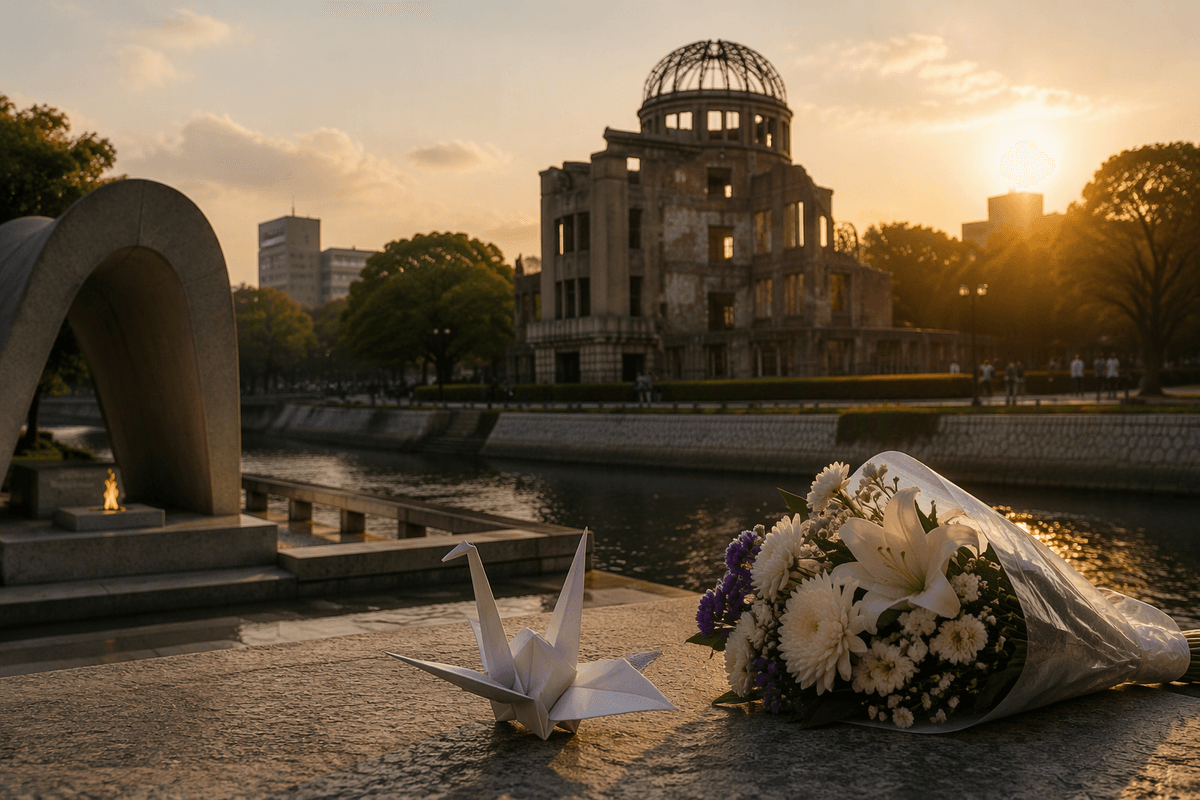
If you have 10–14 days, that’s when “beyond” starts to make sense: one extra region, not three. Pick a single anchor—Hiroshima/Miyajima, Hakone/Fuji views, or Kanazawa—based on what you’d regret missing. The limiting factor isn’t distance; it’s the cumulative friction of transfers, lockers, and crowds that turn ambitious routes into constant movement.
Timing basics: seasons, crowds, and festivals
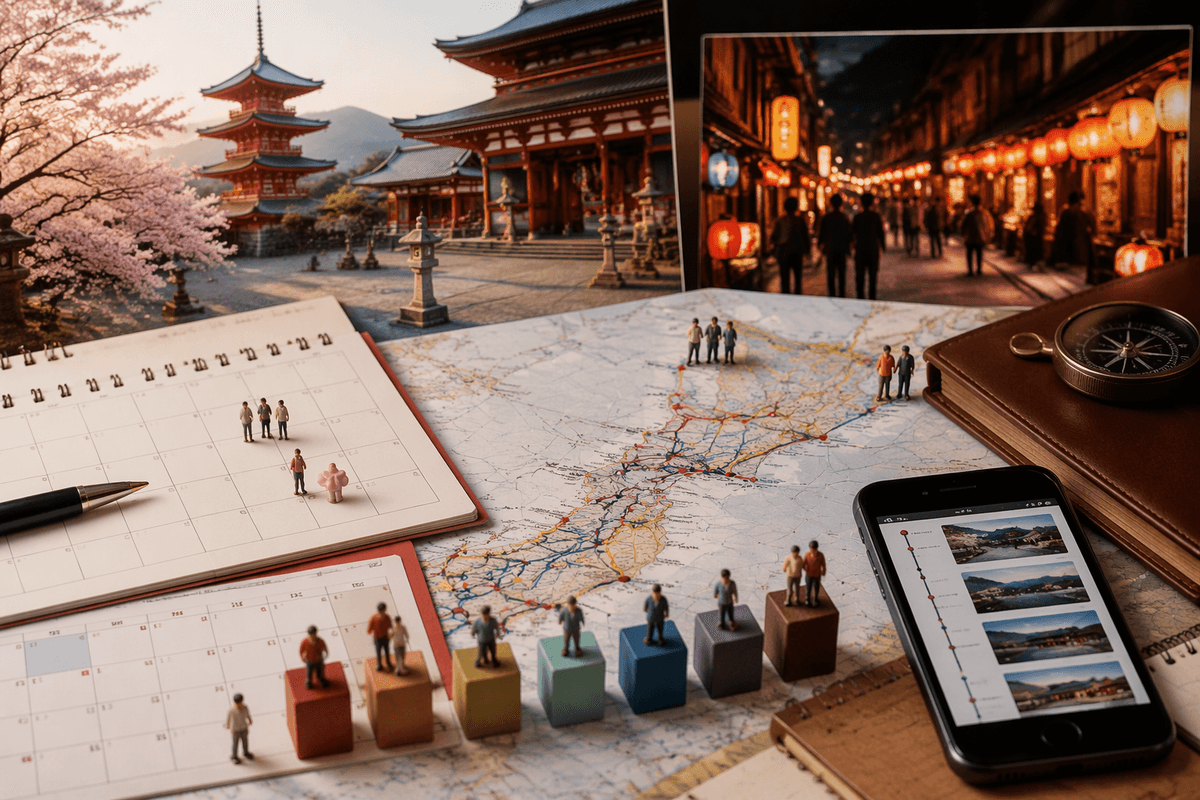
I didn’t fully grasp Japan “timing” until I watched a perfect plan buckle under a simple reality: weekend crowds plus a school holiday turns a 20-minute museum stop into a timed-entry scramble and a 60-minute line. The nice part is you can often fix this without changing cities—just by changing which days you do the headline sights and when you move between them.
For a first trip, I like shoulder seasons because they’re forgiving: late March–early April and mid-November can be gorgeous, but they’re also when demand spikes (cherry blossoms and autumn color), so prices and availability punish indecision. Summer is cheaper in some pockets but physically harder—heat and humidity slow you down and make “one more neighborhood” feel expensive in energy. Winter is calmer and efficient for cities, but shorter daylight and the occasional weather disruption can make day trips less reliable.
Festivals are the sneaky constraint: they’re memorable, but they can quietly erase your lodging options and fill trains. If there’s a must-see event, book that one night first, then build outward; otherwise, aim for weekday temple mornings, do shopping and food streets at night, and schedule your longest transfer on a midweek midday when stations are simply easier to tolerate.
Getting around: trains, IC cards, and passes
The first time I tried to “optimize” Japan trains, I ended up with three browser tabs, two pass calculators, and a growing suspicion I was spending more time saving money than actually traveling. The simpler mental model that held up in real stations was: use an IC card for daily life, buy individual Shinkansen tickets for the big jumps, and only reach for a pass if your route is aggressively rail-heavy.
An IC card (Suica/PASMO/ICOCA) is what makes the day-to-day feel frictionless: tap in, tap out, buses included in many cities, and you stop thinking about exact fares. What doesn’t work as smoothly is relying on it as your “plan”—it won’t fix confusing transfers in mega-stations, and it won’t reserve seats. For Tokyo → Kyoto/Osaka, buying Shinkansen tickets as you go is usually the least stressful; reserved seats cost a bit more but pay you back when you’re tired, carrying luggage, or traveling on a weekend.
The JR Pass becomes worth discussing when you add multiple long-distance rides (not just one Tokyo–Kyoto round). The pass value depends on your exact sequence, and the trade-off is flexibility: passes can encourage rushed day trips because “it’s free now.” If you’re undecided, price out your two or three biggest rides first, then decide—don’t start with the pass and force the trip to match it.
Money, connectivity, and where to stay
I hit my first real friction point at a convenience store: my card worked, then didn’t, and suddenly I was juggling coins while a line formed behind me. Japan is absolutely card-friendly in cities, but the constraint is inconsistency—small ramen shops, temple admissions, and rural buses can still be cash-first. My middle-ground rule: keep a thin wallet of yen for “fast transactions,” and use card for hotels, department stores, and big-ticket transit. If you’re trying to stay midrange, watch the silent budget leaks: ATM fees, luggage forwarding, and “just one taxi” when you miss the last train.
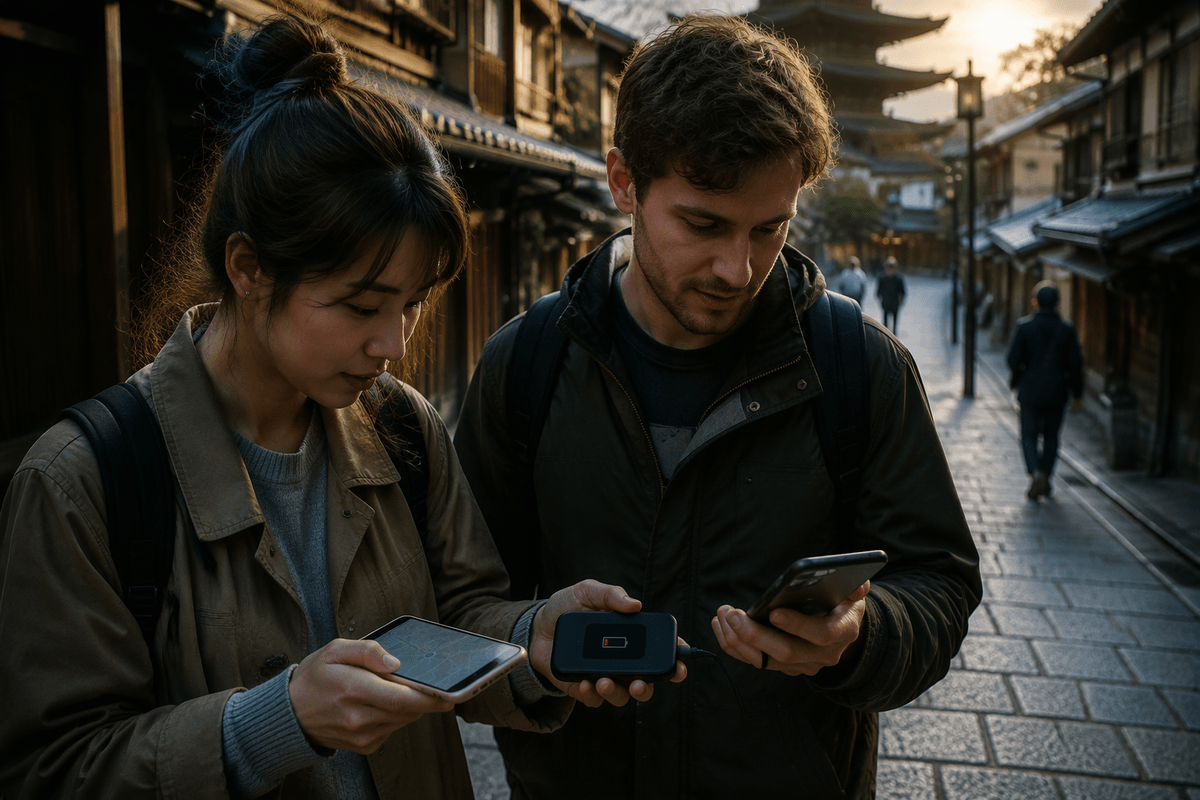
Connectivity is easiest when you decide based on your group. Solo travelers do well with an eSIM (quick setup, no extra device), but it fails if your phone is locked or you’re not confident troubleshooting at 11 p.m. Pocket Wi‑Fi is bulkier, yet it’s forgiving for couples or friends because everyone stays online together—until the battery dies halfway through Kyoto and you realize your maps were the plan.
Where you sleep matters less than the hotel rating and more than people admit: be within a short walk of a major station, even if the room is smaller. The central Tokyo can cost more, but a “cheap” place with two transfers and a long station exit will tax you twice a day. In Kyoto, prioritize access to Kyoto Station or a simple bus/subway line; in Osaka, staying near a hub keeps late dinners fun instead of stressful.
Etiquette, food ordering, and daily comfort
The first time I realized “etiquette” is really logistics was on an escalator: I copied the person in front of me, then watched half the line drift around my suitcase. Japan is forgiving, but it rewards small behaviors that keep people moving—stand where locals stand, keep your voice down on trains, and don’t eat while walking in crowded areas unless everyone else is. The thing that doesn’t work is trying to memorize rules; the better trade-off is to pause for five seconds and mirror the room.
Food ordering is easier than it looks, but it has two common friction points: cash-only counters and decision speed. If there’s a ticket machine, take your time before you step up, then commit—hovering while people queue behind you is where stress spikes. Places with plastic models, photo menus, or English buttons are your low-effort wins; tiny ramen shops are the opposite, especially at peak lunch. I plan one “easy meal” per day (conbini, depachika, a chain) so I can spend my patience on the one meal that’s worth the line.
Daily comfort comes down to avoiding micro-failures: carry a small trash bag (bins are scarce), keep hand sanitizer, and use coin laundry instead of overpacking. When your feet go, your itinerary goes—so I treat cafés and department store basements as intentional reset points, not guilty breaks.
Putting it together: a confident first Japan plan
The moment I stop spiraling is when I force a “good enough” skeleton onto the trip: Tokyo first, Kyoto second, Osaka as a flexible add-on—not three equal priorities fighting for the same days. For 7–10 days, I’d do 4–5 nights Tokyo, 3–4 nights Kyoto, and treat Osaka as either two late evenings or a 1-night finish if you care about nightlife. For 10–14, add one extra region (Hakone or Hiroshima), but only if you’re willing to give it at least two nights; otherwise it becomes a transfer tax.
Transport gets simple when you separate daily motion from long jumps: load an IC card for everything local, then buy Shinkansen tickets for Tokyo→Kyoto/Osaka (reserve seats when you’re moving on a weekend, with luggage, or after a long day). The JR Pass is only a contender if you’ve got multiple big rides; don’t let it bully you into “free” day trips that cost you sleep and patience.
The practical takeaway: plan one headline sight per day, put it in the morning, and leave the afternoon elastic. That buffer is what absorbs queues, missed transfers, and the very real day-two crash from jet lag—without you feeling like you’re failing the itinerary.