Why Hiroshima still challenges visitors today
I hesitated over the map the night before: Peace Memorial Park and Museum feel “non-negotiable,” but the day looks deceptively spacious until you add train times from Kyoto/Osaka and the reality that you’ll move slower once you’re there. Hiroshima challenges visitors because it isn’t a single landmark—you’re constantly switching between logistics (lines, timed tickets, heat) and emotion, and those don’t cooperate on a tight schedule.
What catches first-timers off guard is how ordinary the city feels around the memorial sites, which can make the impact sharper, not softer. The Museum can leave you drained in a way that makes Miyajima afterward either a needed reset or an exhausting extra leg. If you plan for “one more stop,” plan for your own pace changing, too.
What the sites show about war’s human cost
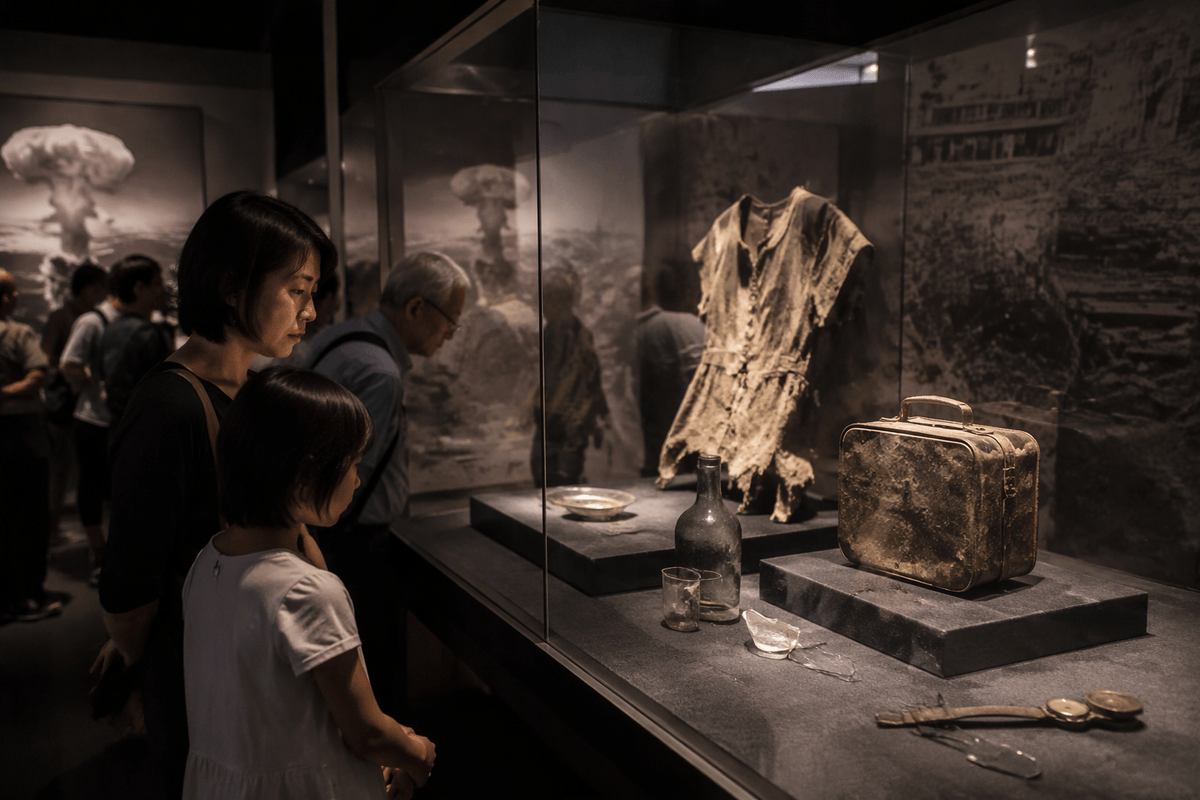
I remember thinking the Park would be the “heavy” part and the Museum would be the “informative” part, and realizing within minutes that it’s the opposite: outside, you can keep moving; inside, the details don’t let you. The Park teaches scale through space—how many memorials you pass, how many school groups arrive, how the river keeps flowing—yet it can feel oddly manageable until you stop long enough to read names and dates.
The Genbaku Dome is where the abstraction snaps into something physical, but it’s also where crowds and cameras can make you feel rushed or self-conscious. The Museum, though, is the clearest lesson in human cost: ordinary objects, injuries, and timelines presented in a way that compresses an entire city’s suffering into a couple of hours. If you’re deciding what to prioritize, I’d treat the Museum as your “one major appointment” and build everything else around the energy you’ll have left—because you may walk out needing quiet more than another destination.
How museums shape memory and responsibility
I hit the Museum at opening because I didn’t want to be hurried through it, and even then the pace wasn’t really mine—school groups, audio guides, and the natural bottlenecks around certain displays decide how long you stand and what you absorb. That’s part of the point: a museum isn’t neutral space, it’s a filter that turns a vast event into a sequence you can actually carry, and the tightest rooms are often where the story feels least “optional.” If you’re sensitive to crowds, the friction isn’t just noise; it can make the grief feel public.
What stayed with me wasn’t a single fact so much as the way the exhibits connect choices to outcomes: policy to firestorms, timelines to bodies, “strategy” to households. It quietly assigns responsibility without telling you what to think, and that’s why it lands differently than the Park. Practically, plan one decompression pocket afterward—ten minutes by the river, a café, even just sitting—because stacking Miyajima immediately can turn reflection into rushing.
Respectful visiting: mindset, behavior, photography
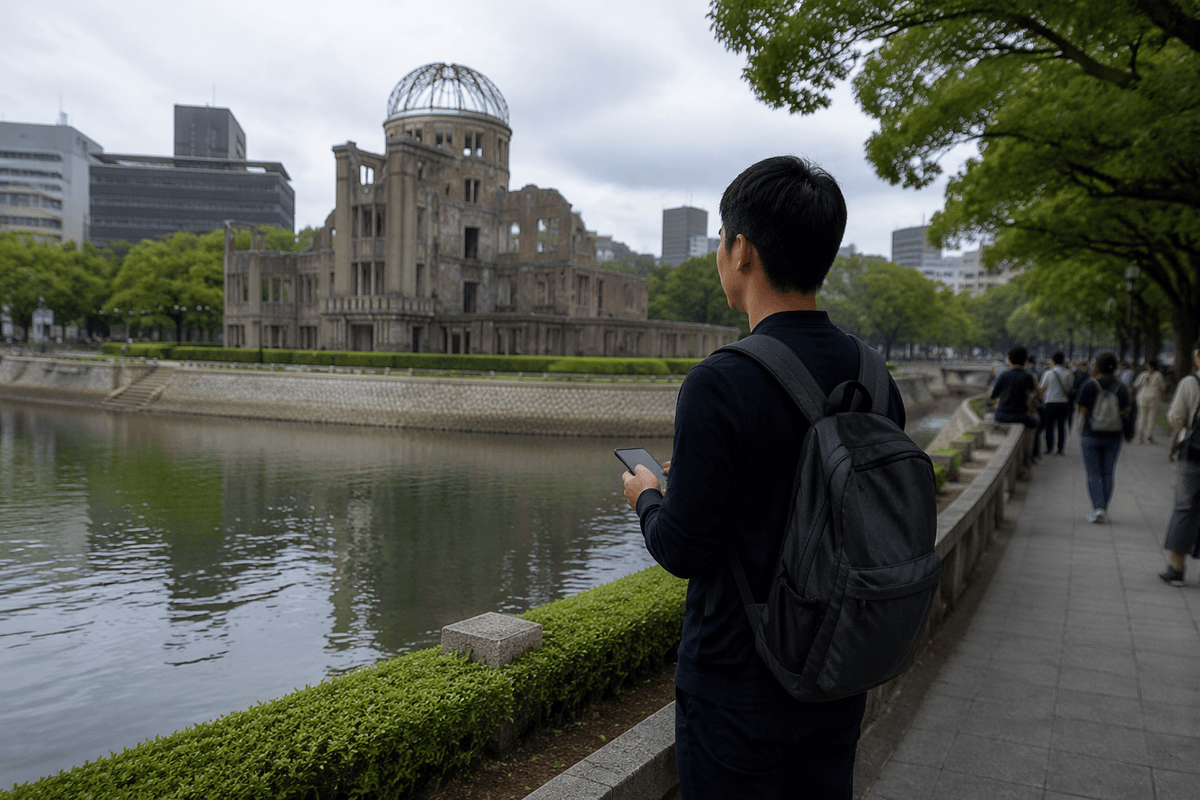
The moment I lifted my phone near the Dome, I felt the hesitation—partly because everyone else was doing it, partly because it’s the one place where “normal sightseeing” behavior looks wrong in your own hands. If you’re traveling from Kyoto/Osaka on a tight day, it helps to decide in advance what you want photos for: memory and context, not proof you were there. Quick wide shots work; lingering close-ups of mourners or school groups doesn’t, and it’s easy to drift into that without meaning to.
Inside the Museum, I treated my phone like it was on a leash: away by default, out only for signage or captions I knew I’d want to reread later. It made the visit slower, but also less scattered, and it kept me from turning the hardest rooms into a checklist. Behavior-wise, the simplest guide is to match the quietest people around you—voices drop, jokes don’t land, and even snack breaks feel better taken outside the Museum rather than in the Park where others are actively grieving.
Turning reflection into learning beyond the trip
After the Museum, I stopped trying to “process it all” on the spot and instead started collecting a few anchors I could carry home: one exhibit label I photographed to reread later, one question I wrote in my notes on the tram back, and one point I wanted to look up from a calmer place. That approach worked better than forcing a conclusion while I was still tired and overstimulated—especially if you’re day-tripping from Kyoto/Osaka and the return train is already clock pressure in the background.
If you want the day to change how you think (not just how you feel), give yourself a small follow-through plan: pick one theme—survivor testimony, nuclear policy, or postwar reconstruction—and commit to a single hour of reading after you’re back. Trying to “do Miyajima for balance” can be restorative, but it can also blur the lesson into a pretty ending; I found it more honest to choose either a quiet decompression or an extra destination, not both, and let the reflection stay unfinished for a while.
Leaving with empathy, clarity, and perspective
On the way back to the station, I found myself double-checking train times and feeling almost guilty that logistics could return so fast—but that’s also the reality of a day trip: you don’t get a clean emotional ending. If you’re choosing between squeezing in one last stop or arriving at Hiroshima Station early, I’d take the buffer; running for a platform turns the whole visit into a race, and the mood doesn’t survive it.
What you leave with, if you let it, isn’t a “summary” of history—it’s a sharper sense of what civilian suffering looks like when it’s documented carefully. The practical cue is simple: stop adding inputs after the Museum, and protect ten quiet minutes before you re-enter Kyoto/Osaka energy. That small boundary makes the empathy feel like something you can carry, not just something you endured.