Why “budget” road trips still blow up fast
I first noticed the “budget road trip” myth when I priced a cheap nightly motel and a reasonable gas estimate—then watched the total jump the moment I added the stuff you don’t feel like deciding yet: where you’ll actually stop, when you’ll hit cities, and how often you’ll pay for convenience to keep moving.
The problem isn’t one big splurge; it’s stacking small defaults. A five-minute detour for a “better” route becomes 20 extra miles because you miss a turn, then you’re buying gas at the next exit because you’re not sure what’s ahead. Flexibility feels like freedom, but it also means you’re constantly choosing the fastest, closest option—usually the priciest.
Even “cheap” choices can cost more when they add friction: a bargain hotel 25 minutes off-route burns time, fuel, and patience, and you’ll often compensate by grabbing pricier food or paying for parking to simplify the next day. The guardrail is noticing early that time, location, and energy are part of the budget, not separate from it.
Route and timing errors that add miles and money

The first time I let the GPS “optimize” my day, it routed me around a mountain pass and into a web of smaller highways that looked scenic on-screen—but came with lower speed limits, more stoplights, and fewer clean exits for fuel. I arrived later than planned, which mattered more than the extra miles: late check-ins shrink your lodging choices, and that’s how a slightly cheaper route turns into a more expensive night.
The fix wasn’t locking every hour down; it was picking two kinds of days. On “distance days,” I treated interstates as the default and only took a scenic detour if it was a true destination (not a vibe). On “experience days,” I planned fewer miles and accepted the slower pace so I wasn’t tempted to make it up by speeding, panic-stopping for gas, or paying tolls just to feel on schedule.
Timing is its own toll road. Hitting a major city at 5 p.m. can burn an hour of idling and force a paid parking or last-minute hotel decision; arriving after dinner often made the same stop simpler and cheaper. If you want flexibility, keep it inside a daily “hard stop” window—otherwise the clock quietly starts spending your money for you.
Lodging mistakes: last-minute booking and wrong locations
The night lodging first “got me” was a stretch where I told myself I’d just drive until I was tired—then discovered that tired is exactly when you overpay. At 7–8 p.m., you’re not comparing neighborhoods or cancellation policies; you’re buying the closest vacancy. In popular corridors (or anywhere near a national park), that can mean either a sketchy bargain with fees you didn’t notice, or a decent room that’s suddenly $60–$120 more than it was at lunch.
The other quiet mistake is booking the “cheap” place in the wrong spot. A motel that’s 20–30 minutes off the interstate looks like savings until you add the extra miles, the late-night food stop you make because you’re not near anything walkable, and the morning drag getting back on-route. I started doing a simple filter: I’d pay a little more to be within 5 minutes of my next morning’s highway, but only if parking was free and the area didn’t force me into paid garages.
If you want flexibility without premium pricing, reserve 2–3 nights ahead with free cancellation and treat same-day booking as the exception—not the vibe.
Food and convenience spending that quietly snowballs
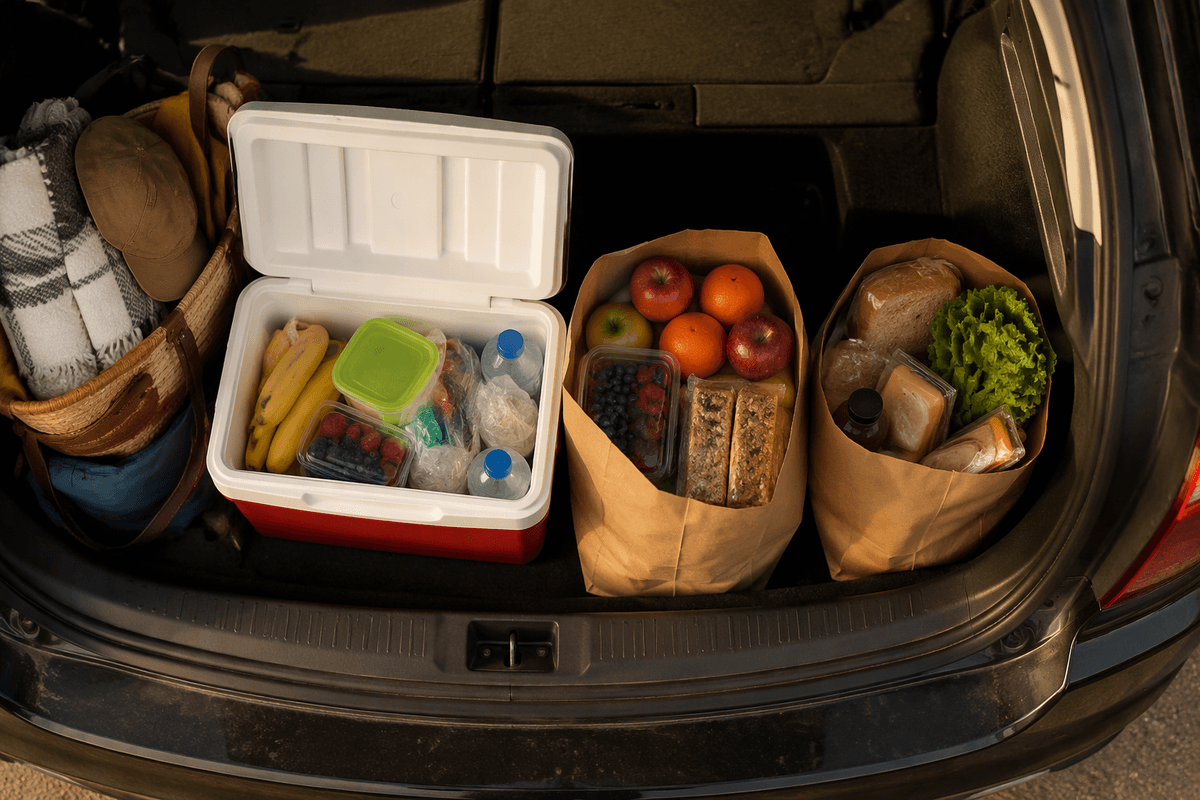
The first time I realized food was leaking money, it wasn’t at a sit-down meal—it was at a gas station where I grabbed a coffee, a snack, and a “quick” sandwich because I didn’t want to lose momentum. It felt like a $6 decision, then it was $14, and then I did it again two hours later because I’d skipped a real stop. When you’re driving long days, convenience food isn’t just pricier; it’s easy to buy twice because it doesn’t actually solve the “I need a meal” problem.
What worked better for me was treating one stop a day as a deliberate reset: a grocery run that covers breakfast and road snacks (and prevents the “might as well add…” checkout creep at every mini-mart). The constraint is time and storage—if you don’t have a cooler, you’re limited to shelf-stable stuff, and you can’t pretend you’ll cook elaborate meals in a motel every night. But even a basic plan (one real meal, one grocery top-off, fewer impulse stops) kept the trip feeling flexible without turning every exit ramp into a tiny, expensive decision.
Fuel and vehicle missteps: mpg, maintenance, and tolls
Somewhere in Kansas, I watched my “gas budget” slip without any dramatic mistake—just a string of small assumptions: I’d picked a vehicle based on the daily rental price, not real highway mpg, and then I drove 75–80 mph because it felt normal on an empty interstate. It worked for time, but the fuel gauge moved faster than my mental math, and suddenly I was buying gas wherever I happened to be, not where it was cheapest or most convenient.
The vehicle choice is the first multiplier. A compact SUV can feel like the safe pick for comfort and space, but on a coast-to-coast run the mpg gap becomes a line item—especially if you’re also hauling extra weight “just in case.” Maintenance is the second: skipping a quick tire-pressure check (or ignoring an oil-change interval because “it’s fine”) is the kind of non-event that turns into a half-day detour and a higher-priced repair in a random town.
Then there are tolls: they’re not always avoidable, and “avoid tolls” routes can quietly cost more in time and fuel. What kept me sane was choosing tolls selectively—pay to bypass big-city bottlenecks, skip them when the savings only bought me a slower two-lane grind.
Attractions, parking, and passes: paying full price
I felt the attraction costs most sharply the first time I rolled into a national park area mid-day without a plan: I paid full entry at the gate, then immediately paid again to park closer because the “free” lots were already full. It wasn’t outrageous in isolation, but it turned a spontaneous stop into a $40–$80 moment—exactly the kind of hit that’s easy to repeat three times in a week if you’re bouncing between parks and big-city viewpoints.
What worked better was deciding, early in the trip, whether I was doing a “parks-heavy” route or just sampling. If you’re hitting more than a couple of federal sites, an America the Beautiful pass can pay off fast, but it only helps if you’re actually going to use it (and it doesn’t solve timed-entry reservations, which can be the real constraint in peak seasons). In cities, I stopped treating parking like an afterthought: a “cheap” museum ticket loses its charm when you add a downtown garage, so I’d either pick places with validated parking or commit to one paid lot and walk a cluster—less driving, fewer surprise fees, slightly more legwork.
A cheaper road trip feels freer—here’s the takeaway
The moment it finally clicked for me was staring at two options on my phone: shave 25 minutes by pushing into a city at rush hour, or stop earlier in a boring town with cheaper rooms and easier parking. The “freer” choice wasn’t the one that stayed open-ended—it was the one that removed the expensive decisions I’d make when I was tired, hungry, and out of daylight.
If you only carry a few guardrails, make them these: protect an arrival window, book lodging a couple nights ahead with cancellation, and decide in advance which “paid upgrades” you’ll use on purpose (tolls to skip a choke point, one paid lot to walk a neighborhood, a pass only if your route is actually parks-heavy). You’ll still miss turns and chase a view now and then, but the trip stops punishing you for it. When your baseline costs are stable, spontaneity feels like a choice—not a bill.