Why Oaxaca’s crafts deserve more than shopping
I realized this the first time I held a wool rug in a market stall and couldn’t answer a basic question: who actually made this? It’s easy to treat Oaxaca’s crafts like souvenirs because the city makes it convenient—rows of textiles, shelves of barro negro, prices already “cleaned up” for tourists. The convenience works, but it also blurs the line between artisan, reseller, and well-meaning guide taking a cut, and you can end up paying more while the maker earns less.
What changed my approach was seeing crafts as a chain of decisions, not a single purchase. If you want pieces that feel meaningful (and you want your money to land where you intend), you’re often choosing between speed and clarity: markets are efficient, village visits take half a day; a workshop visit can be awkward in basic Spanish, but it lets you ask about materials, time, and technique without guessing. That extra context doesn’t make the item “better,” but it makes your purchase more honest—and usually easier to price fairly.
Choose ethical workshops and community-led experiences

I hesitated over a WhatsApp message I’d drafted to a “tour guide” I found on Instagram—great photos, vague details, and a deposit request that felt premature. Oaxaca is full of craft experiences that run smoothly on the surface, but the friction point is figuring out who benefits once you leave the market and start driving into villages. If the pitch is “we’ll take you to three workshops and you’ll get good prices,” that’s often a sign you’re being routed through commission-heavy stops where artisans have less control over the visit and the sale.
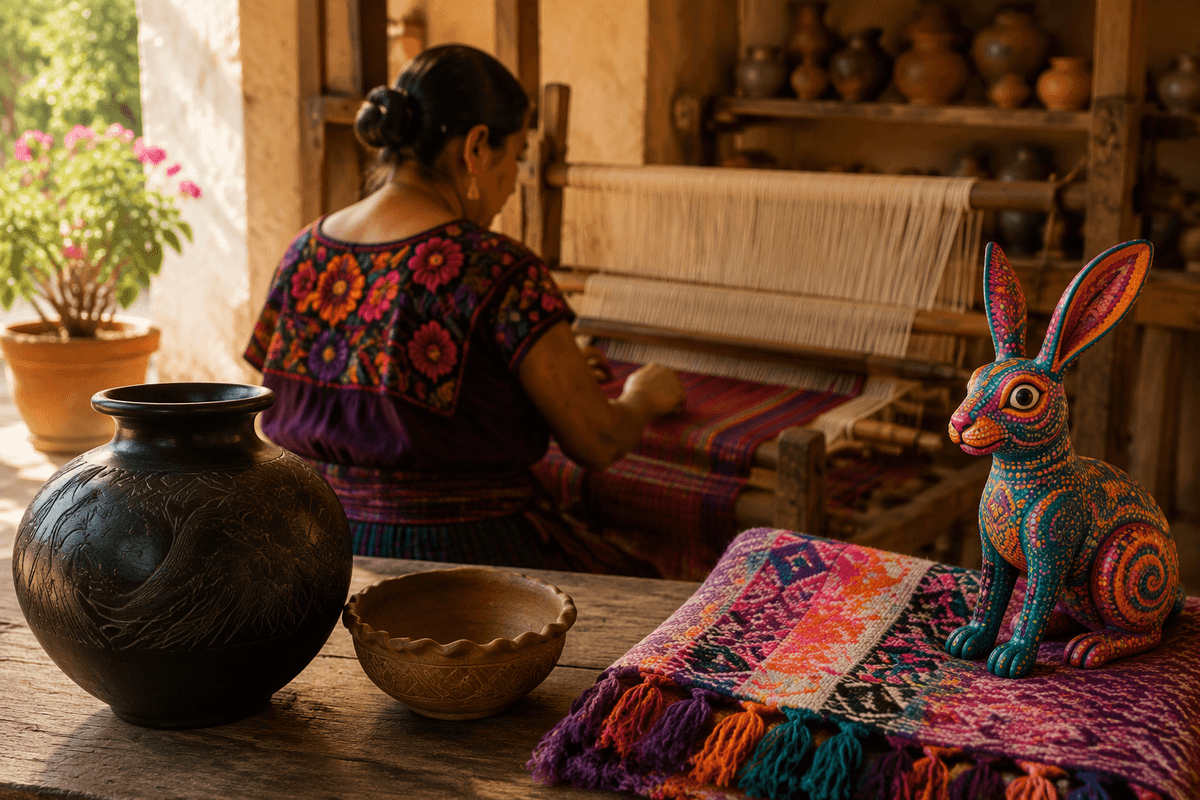
What worked better for me was choosing one community context at a time and asking clearer questions before committing: “¿Es taller familiar? ¿Quién recibe el pago de la visita? ¿Cuánto tiempo pasamos en cada lugar? ¿Podemos comprar directamente?” A good operator (or host) doesn’t dodge those. I also prioritized places that framed the visit around process—loom setup, dye explanations, clay firing—because it naturally slows the pace and reduces the pressure to buy on the spot. The limitation: deeper visits usually mean fewer stops and a higher per-person cost, especially solo, but the experience feels less extractive and the purchases are easier to justify.
If you’re mid-budget and alone, consider joining a small group for one village day to split transport, then doing your serious buying either back in the city from named artisans or on a second return visit. It’s more effort than a single whirlwind tour, but it keeps you from making rushed decisions in someone else’s shopping itinerary.
Visiting etiquette: photos, questions, and personal space
The moment that changed my behavior was catching myself lifting my phone before I’d even said hola—because in workshops, a camera can feel like a transaction even when you don’t mean it that way. What works reliably is asking early and specifically: “¿Puedo tomar fotos del proceso?” (the process) is often an easier yes than faces, kids, or a finished piece that could be copied. If they say yes, I still keep it light—one or two shots, then the phone away—because hovering for the perfect reel makes the visit feel like content production, not a conversation. The constraint: some spaces (especially home courtyards) are also private living areas, and you may not be told where that line is until you cross it.
Questions land better when they’re about craft choices, not a cross-examination of authenticity. I got warmer answers asking why a dye is used or how long a firing takes than asking “is this really handmade?” right away. A useful middle ground is: “¿Quién lo hizo?” and “¿Aquí lo hacen ustedes?”—clear, but not accusatory. If the workshop is busy, keep your questions in batches; stopping someone mid-weave for every detail slows their work and quietly shifts cost onto them.
Personal space is its own etiquette. Looms, drying racks, and clay pieces read like “display” but behave like active workstations—brushing past can undo hours. I started defaulting to: hands behind my back, wait to be invited closer, and never pick anything up unless offered. It’s slightly awkward at first, but it prevents the worst-case scenario: being the visitor who breaks something and then tries to negotiate their way out of it.
Paying fairly: pricing, bargaining, and commissions
The first time someone quoted me a price in a workshop, my instinct was to bargain—then I noticed the piece had a maker’s name attached and a process explanation I’d just watched for twenty minutes. That moment recalibrated things: in a family taller, the “price” usually includes invisible costs (materials, failed batches, hours of labor) that don’t show up when you’re comparing stalls in the city. If you want to negotiate without being that person, the cleaner move is to ask what’s included: “¿Es el precio final? ¿Incluye bolsa/embalaje?” or to request a small adjustment for buying two items, rather than pushing hard on one.
In markets, bargaining can work—especially for identical, reseller-heavy goods—but it gets messy when you can’t tell who made what. I used a simple rule: if the seller can name the maker and the village without a rehearsed story, I keep negotiating minimal; if everything is “artesanal” with no specifics, I treat the price as flexible and my questions as part of the transaction. The limitation is social: your Spanish might not be strong enough to read tone, so staying polite and brief matters more than “winning.”
Commissions are the quiet wildcard. Guides, drivers, and even some “recommended” shops may expect a cut, which can inflate prices or steer you toward high-margin stops. It’s fair to ask directly before you buy: “Si compro aquí, ¿hay comisión?” If the answer is yes, I’d rather tip the guide for their time and then negotiate directly with the artisan, so the math stays transparent and you don’t pay twice in ways you can’t see.
Buy with care: authenticity, materials, and transport
I learned the hard way that “authentic” in Oaxaca isn’t a label you find—it’s a story you can verify quickly, without turning the interaction into an interrogation. When something felt too perfect (especially identical pieces lined up in a market), what worked was asking one concrete process question tied to the object in my hands: “¿Con qué lo tiñeron?” for textiles, “¿Es barro negro bruñido o vidriado?” for pottery, “¿Con qué lo pintan?” for alebrijes. If the answers stayed specific—materials, steps, time—my confidence went up; if it drifted into vague “todo es artesanal,” I treated it as a decorative purchase and priced it accordingly.
Materials matter because they change both cost and risk. Natural dyes and handspun wool age differently than synthetics; burnished clay can look unbeatable but chips if it’s rattling in your daypack. I started choosing fewer, sturdier pieces when I knew I’d be moving around daily, and saving fragile buys for the final 48 hours in the city. The practical constraint is transport: ask for packing before you pay (“¿Me lo puede embalar para viaje?”), carry pottery yourself on buses (overhead bins are a gamble), and photograph receipts/labels in case airport security questions a bundle of “souvenirs” that suddenly looks like inventory.
Leave a positive footprint beyond what you buy
I ran into the easiest “extra” support almost by accident: a workshop owner pointed me to their cousin’s small comedor for lunch, and it turned a purchase-focused morning into a day where more than one household benefited. It works because it’s low-effort and transparent—pay for food, a taxi, a museum ticket, a local guide hour—and the money spreads beyond the single object in your bag. The constraint is decision fatigue: when you’re solo, it’s tempting to default to whatever’s closest in Centro, even if you meant to diversify.
If you want something concrete, I’d pick one: tip the person who translated or drove you (even if you didn’t buy), share the maker’s name when someone compliments your piece (not just “I got it in Oaxaca”), or message the workshop afterward to ask if they prefer referrals via WhatsApp or Instagram. What doesn’t work is promising “I’ll post you” as if it’s payment—especially if you never follow through. My realistic takeaway: buy less, slow down, and leave behind a trail of small, direct payments you can actually account for.