Choosing Your Sydney Walking Route
With only a few hours in Sydney, decide whether harbour views or historic streets deserve more of your time. A waterfront route offers views of the harbour, boats, and some of the city’s best-known landmarks, making it a good fit for first-time visitors and those who want plenty of photo stops. Historic areas provide a different experience, with older buildings, narrow lanes, local shops, and quieter streets that reveal more of Sydney’s past. Trying to cover both in one short outing may leave too little time to enjoy either route properly.
Guided walks are useful for travelers who want historical background, local stories, and a planned route without spending time on navigation. They usually cost more and follow fixed departure times, so there is less room for spontaneous stops. Self-guided walks offer greater flexibility and make it easier to pause for coffee, explore side streets, or adjust the route along the way. However, check the distance, walking surfaces, and available rest stops before setting out. Summer heat, crowded waterfront areas, steep sections, and uneven paths can slow progress, especially when the day includes several other activities. Leave time for breaks and avoid packing too many landmarks into the same walk. A shorter route with time to explore often makes for a more enjoyable introduction to Sydney.
Circular Quay and The Rocks
Start at Circular Quay if the harbor is the priority: the Opera House, Harbour Bridge, and ferry activity create the strongest views with minimal route-finding. The trade-off is exposure—little shade, strong glare, and heavy crowds around midday. A guided walk is worthwhile here when you want architectural and maritime context without stopping to research, but it usually costs more and moves at a fixed pace.
Continue into The Rocks for cobbled lanes, old sandstone buildings, and a more concentrated sense of Sydney’s early history. Self-guided walking works well if you want to pause for photographs or a café, although uneven surfaces and short climbs can feel tiring after the waterfront section. Allow roughly two hours for both areas; start early for quieter streets, or choose late afternoon when the light improves but tour groups may still be clearing out.
Barangaroo to Darling Harbour
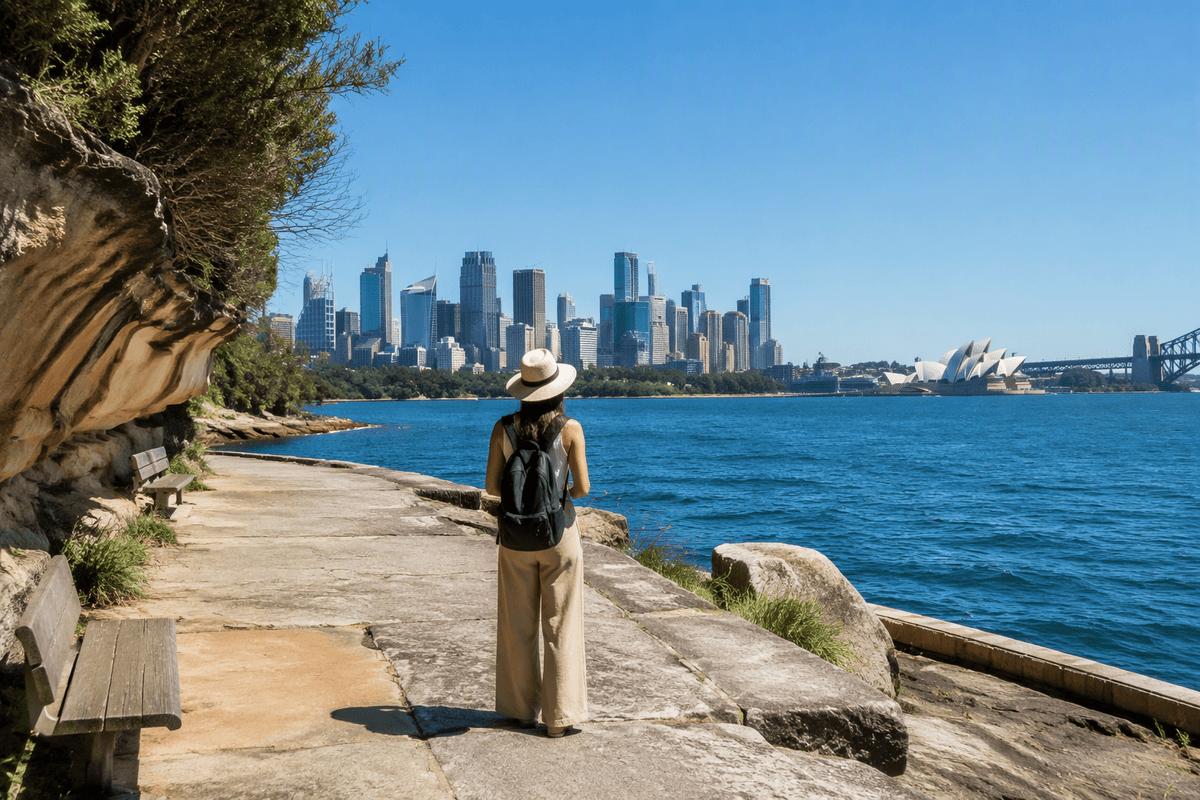
Barangaroo to Darling Harbour suits travelers who want a mostly level waterfront walk with fewer historic details than The Rocks. The Barangaroo Reserve adds landscaped paths and broad harbor outlooks, while the route toward Darling Harbour becomes busier near restaurants, museums, and ferry connections. It is manageable in about 60–90 minutes, but midday sun and limited seating can make the exposed sections tiring.
A self-guided walk is usually enough here, especially if views and flexible stops matter more than interpretation. Choose a guided option if you want the area’s redevelopment and Aboriginal history explained, though fixed timing can be inconvenient around lunch. Allow extra time at Darling Harbour, where crowds and dining queues often turn a short transfer into a longer afternoon.
Macquarie Street and Hyde Park
Macquarie Street is a good choice for travelers more interested in Sydney’s history and architecture than uninterrupted harbour views. Starting near the Opera House, follow the street south toward the State Library of New South Wales, Parliament House, and the historic Mint building before reaching Hyde Park. Along the way, the mix of grand public buildings, heritage facades, and modern city streets offers a glimpse into Sydney’s colonial past and its development as a major administrative center. The route also passes several places where you can step inside for a closer look, making it more than a simple walk between landmarks. From Hyde Park, continue toward the central shopping streets for cafés, shops, and places to stop for lunch.
A guided walk provides useful background on the buildings, their former roles, and Sydney’s political and colonial history. Travelers who prefer exploring independently can move at their own pace, spend more time at selected sites, or take a break inside the State Library. Allow around 75–90 minutes for the main route, with extra time if you plan to visit indoor attractions or stop for photographs. Traffic crossings and limited shade along parts of Macquarie Street may slow the walk in warm weather, while rain can make outdoor exploration less comfortable. Hyde Park offers a pleasant place to rest beneath its trees, although the central paths and surrounding areas become busier around lunchtime. An early morning visit generally provides a more relaxed atmosphere and leaves the afternoon free for shopping or other city attractions.
Practical Tips for Walking Tours
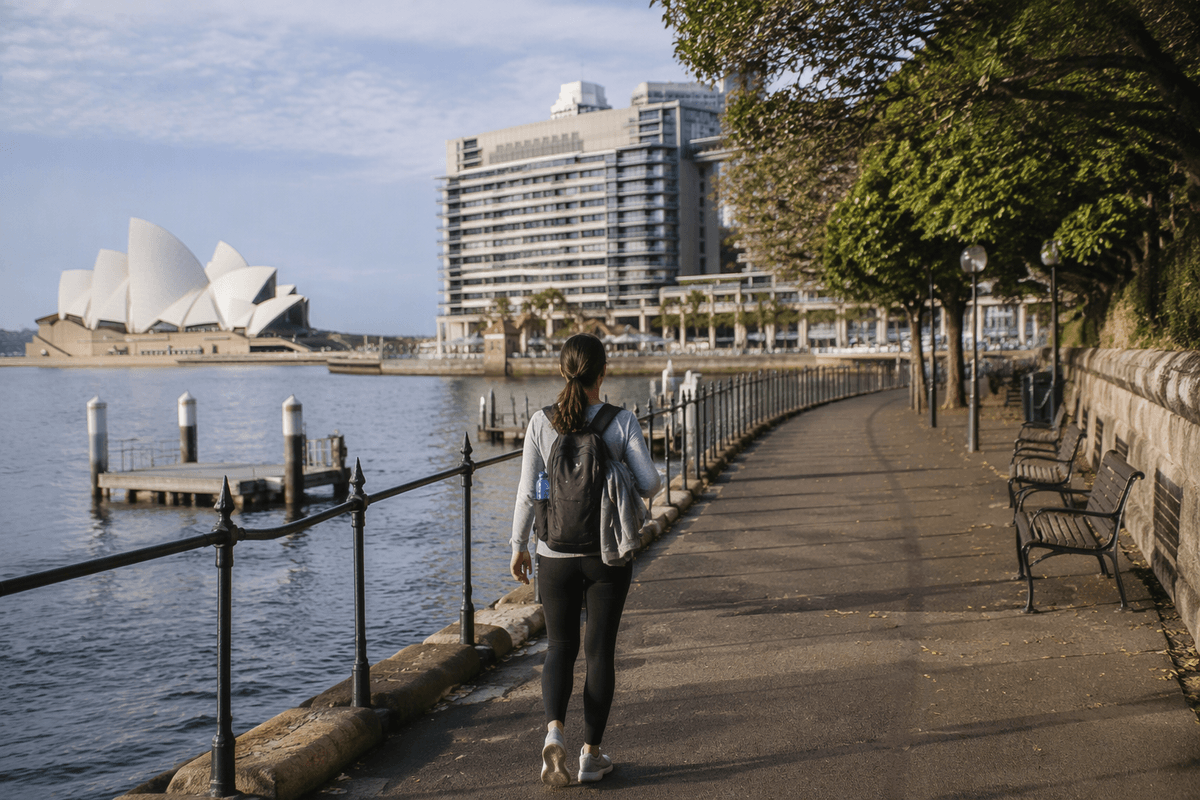
Timing matters more than the advertised distance. Start before 10 a.m. for cooler paths and lighter crowds, particularly around Circular Quay, and check the forecast before committing to exposed waterfront sections. Comfortable shoes, water, sunscreen, and a portable layer reduce small delays that can turn a short walk into an uncomfortable one.
Guided tours suit travelers who value historical explanation and a dependable route; self-guided walks are better when budget, photography, or changing energy levels matter. Keep a buffer of 30 minutes for café stops, crossings, and unexpected closures, and avoid scheduling two demanding routes back-to-back.
Finding Your Ideal Sydney Walk
The best walking route depends on which side of Sydney you want to experience. Circular Quay and The Rocks are ideal for first-time visitors who want iconic harbour views alongside historic streets, heritage buildings, and well-known landmarks. The short distances between major sights make this area easy to explore in a few hours, although popular waterfront paths can become crowded, especially around midday. Barangaroo offers a more relaxed alternative, with landscaped waterfront spaces, open promenades, and places to stop for a meal or coffee. Travelers interested in Sydney’s civic history and architecture may prefer Macquarie Street, where historic public buildings and Hyde Park provide a quieter change of pace from the harbour.
Your choice between a guided and self-guided walk also affects how much you get from the route. Guided tours provide historical background, local stories, and a planned itinerary, making them useful for visitors with limited time. Independent walks offer more freedom to stop for photographs, explore side streets, or take an unplanned break at a café. Before setting out, check the weather, estimate the walking distance, and allow extra time for busy viewpoints and rest stops. Sydney’s coastal sun, occasional rain, and sloping streets can make even a short route more demanding than expected. A relaxed itinerary with one main area to explore usually leaves a better impression than rushing between several neighborhoods and landmarks.