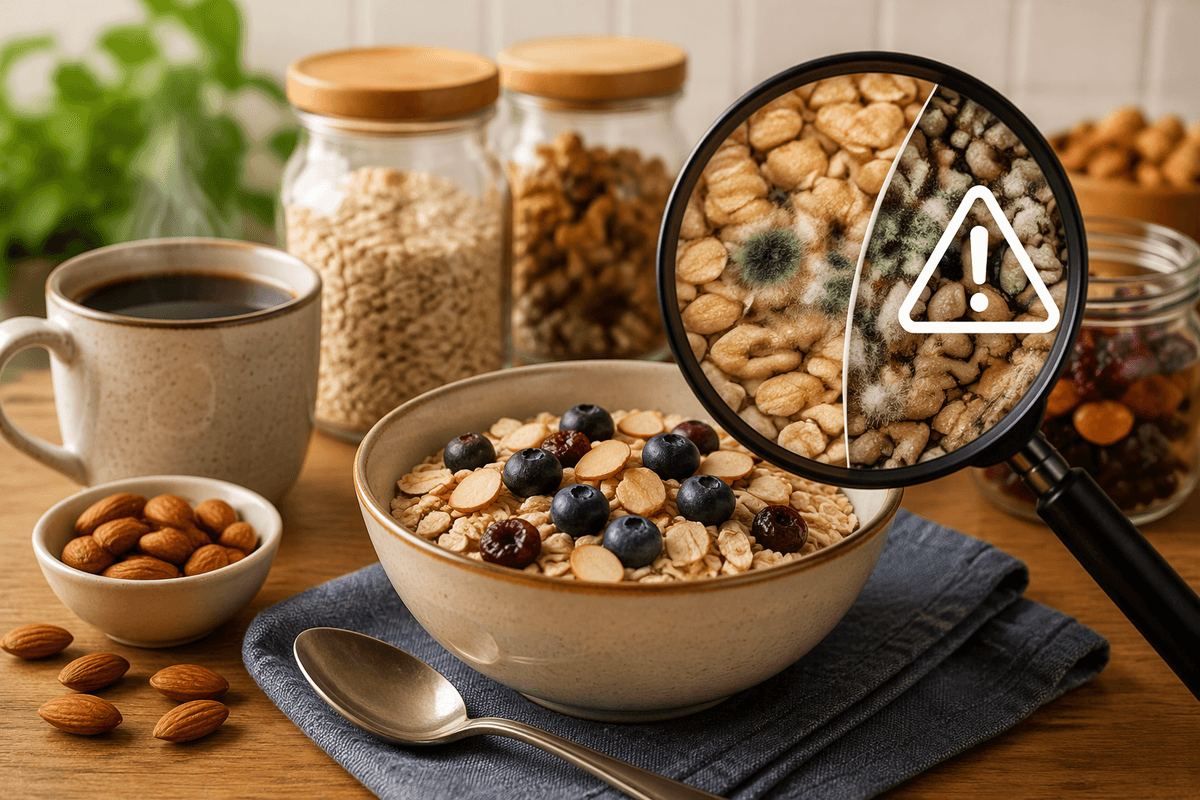
Why “Fungal Toxins” Sound Alarming at Breakfast
A bowl of cereal, a handful of almonds, or a cup of coffee can feel different after seeing a headline about “fungal toxins.” The phrase sounds immediate and personal, even though it may combine several separate ideas: fungi growing on a crop, toxins produced under certain conditions, and the amount someone might actually consume. Those are not interchangeable.
A visible mold finding can indicate spoilage, but it does not automatically show that a food contains the same toxin level as another food, or that exposure is significant after one serving. Concerns depend on the crop, growing conditions, drying, storage, testing, and how often the food is eaten. That variability is easy to miss in short warnings, especially when breakfast staples are consumed repeatedly. The uncertainty does not make the issue meaningless; it means the food type, batch, and eating pattern matter more than the alarming phrase alone.
How Mycotoxins Can Enter Everyday Foods
The path from field to breakfast table is rarely a single event. Fungi may be present on crops such as corn, wheat, oats, nuts, or coffee during growth, harvesting, drying, transport, or storage. Under suitable conditions—especially moisture, warmth, and time—some species can produce mycotoxins. That possibility is different from simply finding fungal material on or near a food.
Storage can introduce another layer of variation. A product may have been handled well before purchase but exposed to humidity after opening, while another batch may have faced problems earlier in the supply chain. Testing often samples only part of a larger lot, so results describe a tested portion rather than every package or serving. Processing may reduce some contaminants, redistribute them, or leave levels largely unchanged, depending on the food and the substance involved. Repeatedly eating a particular product can matter more than a single unusual serving, but individual exposure is difficult to estimate without information about the specific food, batch, amount, and storage conditions.
The Breakfast Foods That Raise Different Questions
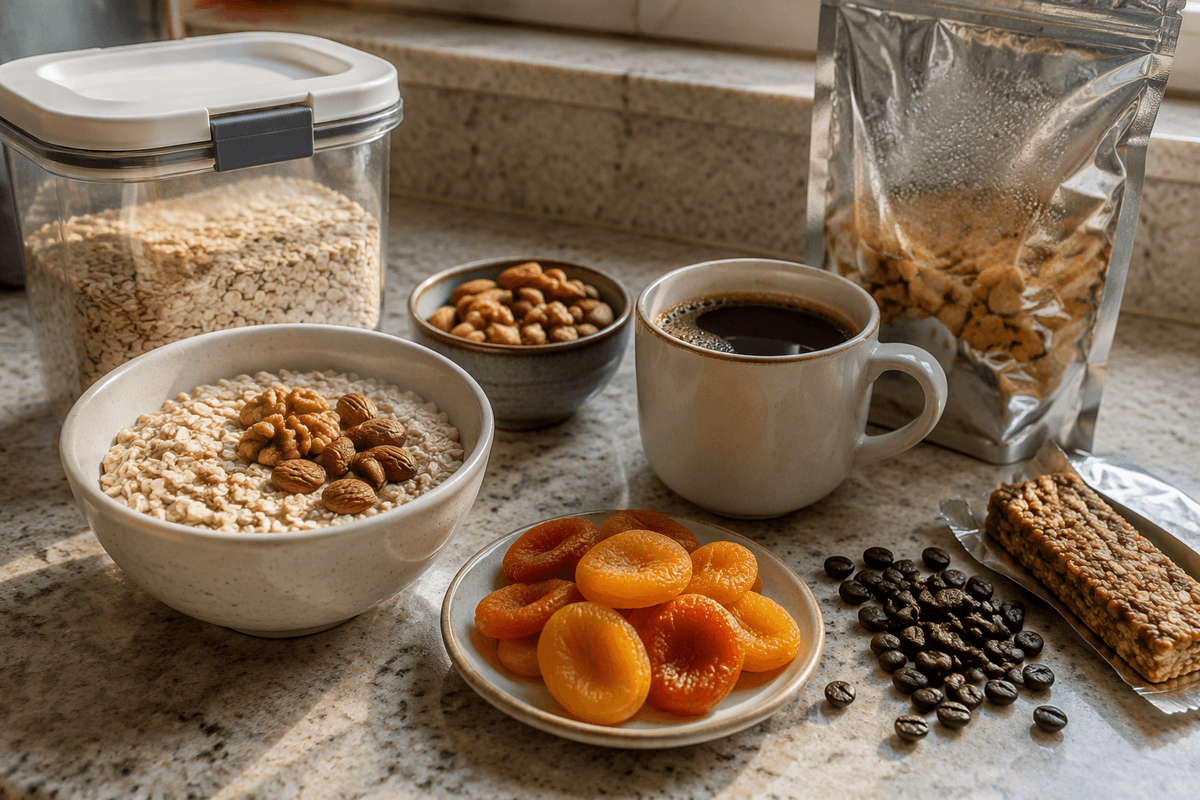
A spoonful of oats and a handful of nuts may sit in the same pantry, but they do not raise identical questions. Grains can be affected by fungi before or after harvest, while nuts may be more sensitive to moisture and storage conditions that develop during handling. Dried fruit has had much of its water removed, yet its concentrated sugars and occasional soft spots can make storage quality important. A moldy-looking item suggests spoilage and is a reason for caution, but appearance alone cannot show whether a particular mycotoxin is present or how much might be involved.
Coffee adds another complication because the beans are grown, dried, roasted, ground, and brewed before they reach the cup. Those steps can change what remains, while the amount consumed varies widely from one person to another. Packaged cereals and snack bars may combine several ingredients, making a headline about one component difficult to apply to the finished product. In each case, the useful questions are specific: Was the food damaged or damp, how was it stored, was the batch tested, and is it eaten occasionally or every day? The category of food narrows the discussion, but it rarely settles it by itself.
Processing Changes Exposure Without Erasing Uncertainty
The same ingredient can look less concerning after roasting, baking, soaking, or milling, but that change does not make the original question disappear. Heat may reduce some mycotoxins, while others can remain relatively stable; results also depend on temperature, timing, moisture, and the food itself. Milling may spread a contaminant through flour rather than remove it, and removing an outer layer may help in some grains without providing a reliable solution for every substance.
This is why a finished breakfast product cannot always be judged from the condition of one raw ingredient, yet processing is not a guarantee of safety either. A roasted coffee bean, toasted nut, or baked cereal may have undergone several changes before it is eaten, but the effect on exposure can be difficult to know without product-specific testing. Home preparation adds further inconsistency: cooking time, batch size, and storage after opening vary. Processing can lower or alter exposure, but it rarely provides enough information to estimate an individual serving with confidence.
When a Sensible Food Choice Backfires
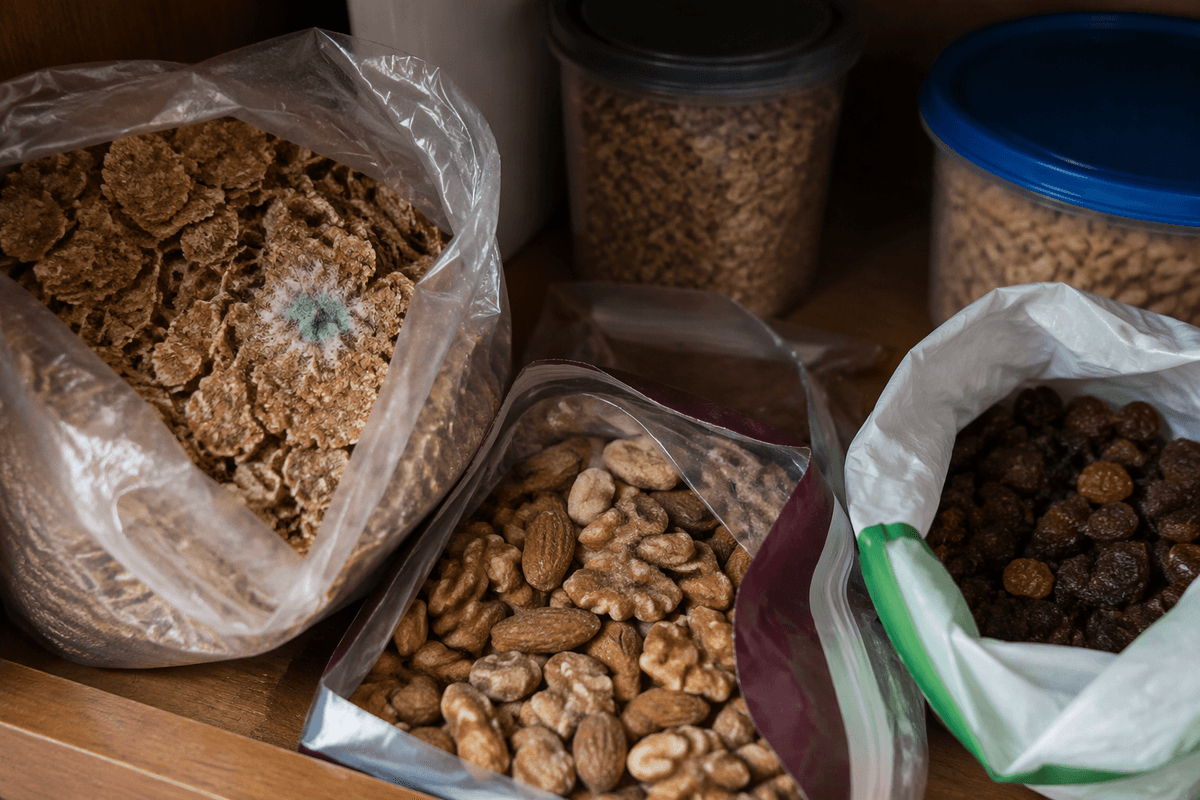
The reassuring label may be the very thing that changes how a food is used. Someone chooses whole-grain cereal, unsalted nuts, or dried fruit because it seems practical and nutritious, then keeps the package for weeks in a warm, humid cupboard. A product that was acceptable when opened may develop stale odors, clumping, soft spots, or visible mold later. That does not prove dangerous toxin exposure, but it does show how storage can turn a sensible choice into a less certain one.
A person notices one questionable nut or grain and assumes the entire category is unsafe. In reality, contamination can vary between batches, ingredients, and portions, while a small visible problem may reflect localized spoilage rather than uniform contamination. Still, repeatedly eating from a damaged or poorly stored package makes the situation harder to dismiss. The appearance, taste, and nutrition labels cannot reveal the amount of a specific mycotoxin. They can signal that a food deserves caution, but they cannot by themselves measure exposure.
Symptoms Rarely Identify the Cause Clearly
A mild headache, stomach discomfort, fatigue, or an unusual taste after breakfast can feel like evidence of a hidden food problem, especially after reading about mycotoxins. Yet these symptoms are common and can follow many unrelated changes, including poor sleep, caffeine differences, food intolerance, stress, or an ordinary stomach illness. Their timing may raise a question, but it rarely identifies the cause.
The same uncertainty applies when someone feels fine. Lack of symptoms does not measure toxin exposure, just as symptoms do not confirm it. A single serving, a repeatedly eaten product, and a visibly spoiled package represent different situations, but personal experience alone cannot reliably separate them. Paying attention to patterns can still be useful: whether symptoms recur after a particular food, improve when the food is avoided, or occur alongside spoilage signs. Even then, the pattern may remain inconsistent, and it should not be treated as a home test for contamination. More useful questions usually concern the product, storage, batch information, and eating frequency rather than symptom matching alone.
What Breakfast Safety Questions Can Actually Clarify
The package in front of you may answer more useful questions than a frightening headline can. Is there visible mold, dampness, unusual clumping, or a stale smell? Was the food opened long ago, stored in heat or humidity, or repeatedly exposed to air? These observations cannot measure a mycotoxin, but they can distinguish a current spoilage concern from a general claim about a food category.
It also helps to ask what the warning actually describes: fungal growth, a detected toxin, or a measured level in a particular batch. The food type, serving size, frequency of consumption, processing, and any available testing information all change the interpretation. Without those details, it is difficult to translate a broad concern into personal exposure. A sensible response is not to treat every mold reference as proof of danger, nor to ignore a damaged product simply because symptoms are absent. The clearer question is usually whether this specific food, under these storage conditions, remains worth eating.