Why Artificial Sweeteners Raise Gut Health Questions
A second can of diet soda can seem harmless, especially when it replaces a sugary drink. Yet some people notice bloating, looser stools, or changes in appetite after making that swap, while others notice nothing at all. That contrast is part of why artificial sweeteners continue to raise gut health questions.
The term covers several different compounds, and they do not necessarily behave alike in the digestive system. The amount consumed, how often it appears in the diet, the rest of the meal, and a person’s existing gut patterns may all shape the response. A reaction after one product does not automatically show that the sweetener caused it; timing, other ingredients, and ordinary day-to-day variation can overlap. Still, repeated changes that follow a particular sweetener or routine may offer a useful clue—provided they are observed carefully rather than treated as proof.
What Changes Have Researchers Actually Observed
On some days, the change is easy to notice: more gas after a sugar-free snack, a different stool pattern, or a meal that feels less satisfying than expected. In research settings, investigators have observed possible shifts in gut bacteria, digestive comfort, glucose handling, and appetite-related responses after exposure to certain low-calorie sweeteners. These findings do not appear consistently across every study or every person, and the size of the change may be modest.
A study may use a larger amount than someone typically consumes, or examine a single sweetener rather than the blend found in a finished product. Researchers may also measure bacterial changes without knowing whether those changes produce noticeable symptoms. That creates an important gap between a laboratory result and everyday experience. A diet drink that seems to affect one person’s digestion may have little apparent effect on another’s, particularly when meal patterns, fiber intake, medications, and existing gut sensitivity differ. Observing a repeated pattern can be useful, but a single uncomfortable afternoon remains difficult to interpret.
The Gut Response Depends On More Than Sweetener
The diet drink may be the most visible change, but it is not always the only one. A person who begins using more sugar-free products may also be eating fewer whole foods, drinking less water, or changing meal timing without noticing. Those shifts can alter fullness, bowel habits, and gas production alongside the sweetener itself. Even the same amount may feel different when consumed on an empty stomach, with a large meal, or repeatedly throughout the day.
Repeated exposure can make the pattern harder to read rather than clearer. Someone may tolerate a small amount in coffee but feel uncomfortable after several servings spread across snacks and drinks. The rest of the diet also matters: low fiber, sudden increases in fiber, rich meals, and other poorly absorbed carbohydrates can produce similar sensations. Individual gut patterns add another layer of uncertainty, since normal digestion is not perfectly consistent from day to day. Looking at the amount, frequency, surrounding foods, and timing may therefore reveal more than focusing on the sweetener name alone.
When A Reasonable Substitution Causes Discomfort
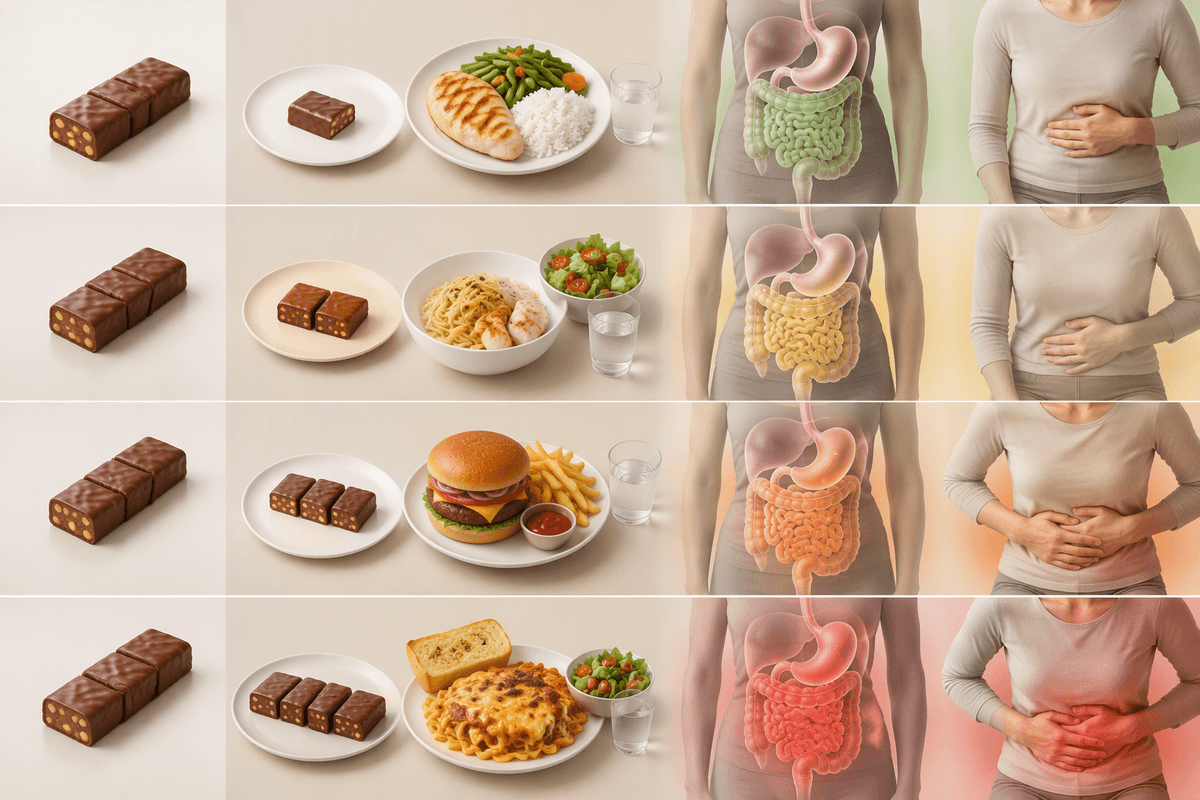
The discomfort can be especially confusing when the substitution seems sensible. Replacing a sugary dessert with a sugar-free bar, for example, may reduce added sugar but introduce a larger amount of sweetener or other ingredients that are harder to tolerate. Bloating, cramping, or urgent bowel movements may appear later, making the connection easy to miss. The product may feel like the obvious explanation, but portion size, added fiber, dairy, fats, or a meal eaten at the same time can also contribute.
That does not make the experience imaginary, nor does it establish a single cause. A person might tolerate one serving occasionally but notice symptoms when the product becomes a daily habit. The response may also fade, return, or vary with stress and ordinary changes in digestion. If discomfort repeatedly follows the same product or amount, noting that pattern can be more informative than judging the substitution as simply “healthy” or “unhealthy.”
Why Symptoms Can Be Difficult To Interpret
A few hours of bloating can seem to point directly to the last sugar-free product eaten, but digestion rarely follows such a neat sequence. Symptoms may appear after a delay, overlap with a larger meal, or reflect changes in fiber, caffeine, dairy, stress, or sleep. Even bowel habits can shift naturally from one day to the next, which makes a single episode weak evidence on its own.
The pattern becomes more useful when the same response appears repeatedly under similar conditions. If discomfort follows one product but not another, or occurs mainly after larger portions or several servings, those details may help narrow the possibilities. Still, removing several foods at once can create another problem: symptoms may improve, but it becomes unclear what actually mattered. Keeping the observation simple—what was consumed, how much, when symptoms appeared, and what else changed—can make personal effects easier to interpret without turning every digestive change into proof of a gut-health problem.
Different Sweeteners May Behave Differently

One sugar-free product may sit comfortably while another produces gas, urgency, or a lingering aftertaste that changes how much a person wants to eat. That difference is not surprising when the products contain different sweeteners, combinations, or amounts. Some compounds pass through the digestive tract with limited absorption, while others may be handled differently by the body or included alongside ingredients such as added fiber and sugar alcohols. The label may therefore matter as much as the broad description “artificial sweetener.”
Even within the same sweetener, dose and routine can change the experience. A small amount in coffee may cause no noticeable problem, whereas several diet drinks, packets, or sugar-free snacks across one day may create a different pattern. Responses can also vary according to the gut microbes already present, recent diet changes, and individual sensitivity. Comparing products one at a time may offer a clearer clue than switching between several at once, although everyday meals and symptoms remain inconsistent enough that the result is not definitive. A repeated response is worth noticing, but it still describes a personal pattern rather than a universal rule.
A More Practical Way To Understand Personal Effects
After noticing a pattern, it can help to change only one part of the routine at a time. A person might compare a smaller portion, fewer servings, or a different product while keeping meals reasonably similar. Recording what was consumed, the amount, timing, and any digestive changes may reveal whether symptoms repeatedly track with a particular sweetener or habit. The process is imperfect, since stress, sleep, caffeine, fiber, and ordinary day-to-day variation can still affect the result.
The goal is not to prove that a sweetener is harmful or harmless for everyone. It is to distinguish a consistent personal pattern from a coincidence that happened once. If discomfort continues, becomes severe, or appears alongside other concerning changes, a healthcare professional can help consider broader explanations. For many people, the useful conclusion is more modest: one product, dose, or routine may not suit their digestion, even when another similar option feels entirely manageable.