The offer looks safe until month three
The first two paychecks are usually the calm part. The “guarantee” hits your bank account on schedule, and it’s easy to treat it like a temporary salary while you learn the product, rebuild a pipeline, or wait out licensing. Even if commissions are slow, the draw keeps bills current, so the offer feels safer than a pure commission plan.
Then month three shows up with a different kind of pressure: your CRM activity is supposed to convert, and your manager expects the draw to start shrinking against real commission dollars. If your close cycle is longer than the plan assumes, you can look “behind” while working hard. That’s the moment to stop asking whether the draw pays on time and start asking what it does to your balance if conversions land late.
What you think a draw will do
In your head, the draw is a bridge: it smooths the ramp-up, protects rent and groceries, and then quietly disappears once deals start landing. So the math you run is simple—“I can live on the guarantee, and anything I sell is upside.” Most people also assume the draw is neutral, like an advance that doesn’t change the plan itself.
The first mismatch is that the draw is rarely “free money,” even when it’s called guaranteed. It’s usually a running balance that gets cleared by commissions later, which means timing matters as much as performance. A strong month after a weak one can still produce a smaller check than expected because you’re paying back old shortage before you feel the new win. And if the plan nets the draw before taxes and deductions, the take-home can feel even tighter than the headline guarantee, especially if you’re carrying higher benefit costs or a 401(k) contribution.
Where the draw starts quietly changing behavior

After a couple cycles, the draw stops feeling like a bridge and starts behaving like a meter. You notice it in small choices: prioritizing short-cycle deals over higher-value ones, pushing prospects to close before they’re qualified, or discounting just to get something on the board. The constraint isn’t effort; it’s timing. When commissions are netted against a running draw balance, a “good month” can still land as a modest deposit, so the immediate reward for smart patience gets muted.
That changes the daily portfolio mix. Long-lead opportunities, referrals, and relationship-building suddenly look expensive because they don’t clear the balance this month, even if they’re better for annual earnings. People start managing for payroll optics—what clears the draw—rather than unit economics. The quiet risk is you don’t notice the trade until the pipeline quality drops and the draw balance becomes harder to work off in the next quarter.
Clawbacks arrive when commissions lag behind
Eventually the running balance stops being abstract and shows up as a negative surprise on an otherwise “fine” commission month. If your plan nets commissions against the draw, a delayed close doesn’t just mean a smaller check this month; it can mean the next check is smaller too, because you’re clearing an older deficit before you see current production. The timing trap is common in longer-cycle roles: approvals slip, underwriting drags, clients reschedule, and the plan still treats the draw like it should have been covered on schedule.
The sharper edge is the clawback language that kicks in once the balance gets “too old” or you exit. Some plans convert an outstanding draw into a repayment obligation at a specific date, others withhold future commissions until the balance is zero, and some require repayment from final wages or a lump sum after termination. The friction isn’t just money; it’s optionality. When you know leaving could trigger repayment, you negotiate less, wait longer to switch teams, and tolerate a bad territory because the balance is acting like a soft handcuff.
Build three cash-flow scenarios before you sign
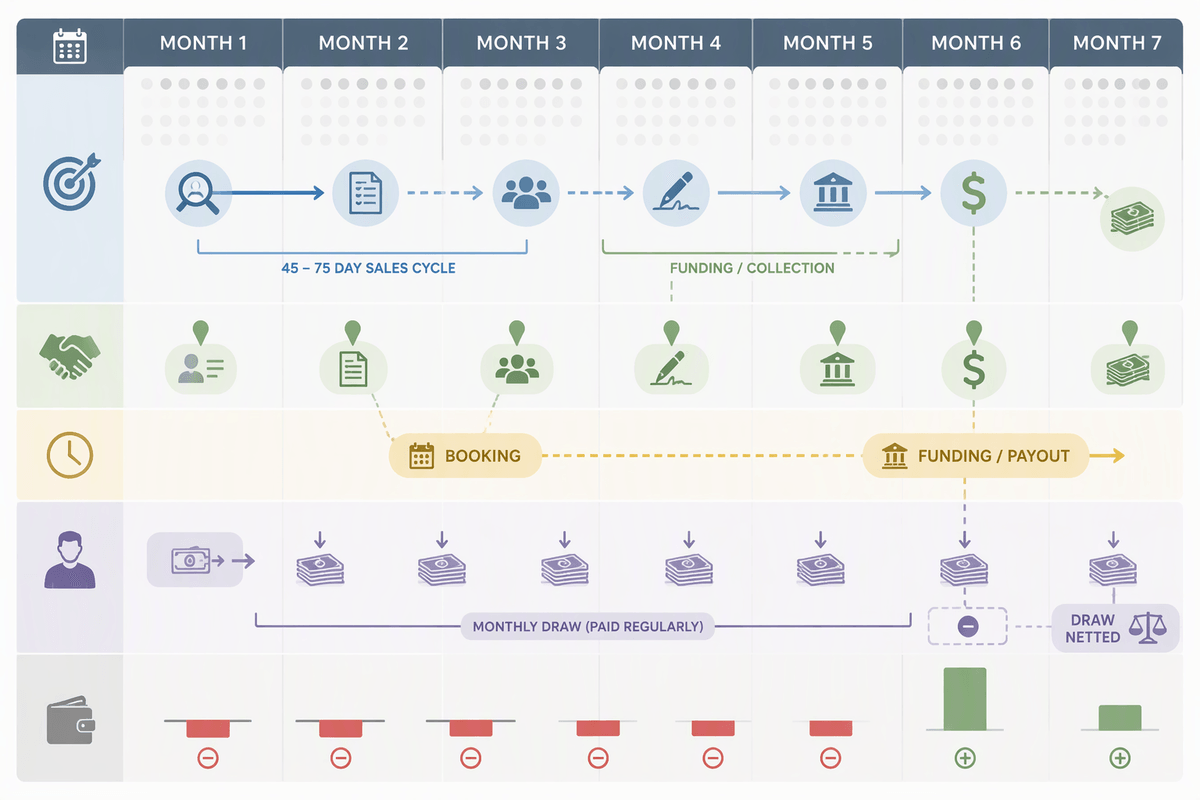
Before the offer turns into a lived-in problem, model it like a cash-flow product, not a motivational guarantee. Build three monthly scenarios on a single sheet: “covers draw,” “barely covers draw,” and “doesn’t cover draw.” Use the plan’s actual mechanics: when commissions are paid (booking vs funding), whether the draw nets before taxes, and whether any balance can be carried longer than a quarter. The constraint to respect is timing—if your close cycle is 45–75 days, month one and two performance may not touch month one and two payroll.
In each scenario, calculate the same three lines: gross commissions generated, commissions paid this month, and draw balance after netting. Then convert to take-home by subtracting fixed deductions you can’t dodge (benefits, retirement deferral, garnishments) so you’re not fooled by gross. In the “good” case, assume one strong month arrives late and watch whether the paycheck still looks muted because it’s clearing old balance. In the “bad” case, assume a slip plus one chargeback and check whether you can still pay rent without using credit.
Spot clauses that tilt quotas or rates
Once you’ve sketched the three scenarios, the next friction is realizing the draw agreement and the comp plan are usually wired together. The offer can look identical across two companies—same guarantee, same headline commission rate—yet one version quietly raises the production you need to “feel” commissions. Watch for language that lets the employer change the plan mid-period, or that treats the draw as a reason to shift you onto a different tier until the balance is cleared. If your close cycle is already tight, a one-month timing miss can turn into a quarter of working just to get back to neutral.
The clauses that do the most damage tend to be small: “management discretion” on crediting deals, rate reductions on “house accounts” or renewals, higher quotas during ramp, or a rule that commissions are calculated after write-downs, refunds, or chargebacks. Also look for split-credit mechanics that count 100% of the sale toward quota but pay you 50% of the commission. The constraint isn’t motivation; it’s math—those tweaks change whether a strong month actually produces a strong check, or just a cleaner draw balance.
Decide with eyes open, not just comfort
At this point the question isn’t whether the draw feels stable; it’s whether the stability is priced fairly. Put the offer next to your three scenarios and ask one blunt thing: in an average quarter, how often do you actually get paid “above draw” as spendable cash, not just as a smaller negative balance. If the plan’s timing means your good month mostly repays the prior two, the guarantee is functioning more like a loan with payroll-friendly packaging.
Then decide based on what you can absorb. If you have thin savings, high fixed bills, or a long sales cycle you can’t speed up, the downside isn’t motivation—it’s needing credit while “employed.” If the terms let you walk without a repayment shock, change rates midstream, or keep quotas steady while cycles slip, the comfort is temporary. Take the role only if the math still works when nothing goes perfectly.