When a side gig starts throwing off cash
The money from the side gig doesn’t arrive like payroll money. It hits your checking account in uneven bursts, sometimes after fees, sometimes after a platform holds it for a week, and it feels “extra” because nothing obvious is missing. Then a bigger month shows up and the temptation is to treat it like a bonus: pay down a card, upgrade a laptop, book a trip. The friction is that the tax cost is still accruing in the background, even if the cash flow looks clean today. That’s usually when the math starts to matter.
The first sign a side gig has changed categories is simple: the deposits are no longer occasional, and they’re large enough that you’d notice if they stopped. On a W-2 paycheck, withholding quietly pre-pays most federal and state tax. Side income typically arrives with $0 withheld, so every payment is “gross” from a tax perspective. If you’re clearing a few thousand dollars over a quarter, it’s easy to be short without realizing it. The mistake isn’t spending the money; it’s spending all of it before you’ve carved out the tax slice.
The easy mistake: assuming your paycheck covers it
Once the side income is steady, the default assumption is that “my paycheck withholding will wash it out.” It feels reasonable because your W-2 withholding changes every pay period, and the side gig doesn’t send a bill. The catch is that payroll withholding is calibrated to what the payroll system can see: that job’s wages, and whatever you put on your W-4. If you don’t tell it about the extra income, it won’t “auto-correct” in the background. Meanwhile the side income is stacking up its own income tax, plus self-employment tax if it’s 1099 work, and neither one is being prepaid.
This is where people get tripped up by timing. Withholding from a paycheck is treated like it was paid evenly throughout the year, even if it mostly happens late. Side income doesn’t get that treatment unless you send estimated payments or increase withholding. So a good first quarter on the side can quietly put you behind before you’ve even noticed a pattern. By the time you realize your W-2 refund has shrunk, you’re not “a little off” anymore—you’re financing the gap with April’s due date, and hoping you won’t also cross the underpayment line.
The consequence shows up at filing time
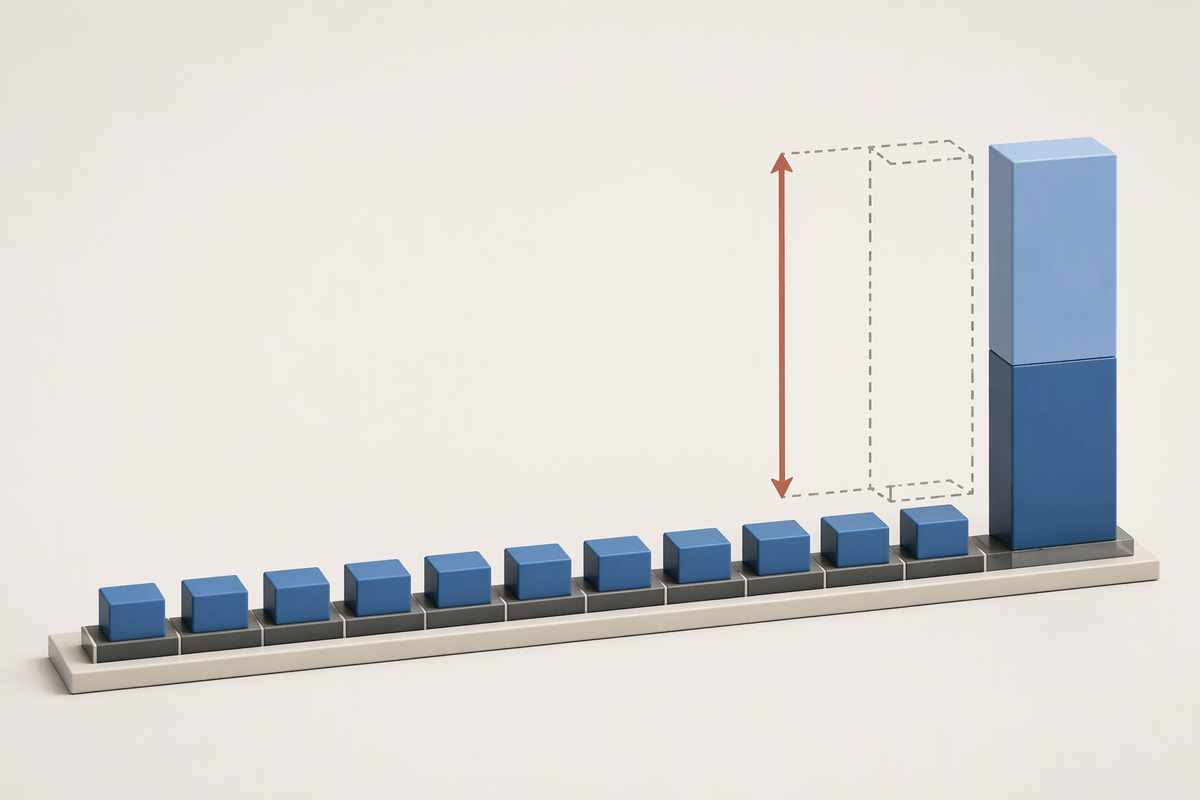
It usually lands all at once when the return is drafted: your W-2 withholding did its job on wages, but the Schedule C profit shows up as additional taxable income, and the self-employment tax adds a second layer. The software doesn’t “spread” that side income across pay periods the way payroll did; it just totals the year and asks, “how much was prepaid?” That’s when a refund turns into a balance due that’s big enough to feel like a bill, not a rounding error.
The nasty part is cash timing. By the time you’re staring at an April payment, the side gig cash may already be gone—inventory was restocked, ads were run, or a slow month hit right after a strong one. If the gap is large enough, you can also pick up underpayment penalties and interest because the IRS expected tax to be paid during the year, not settled at the end. The return is simply where the shortfall becomes visible, and where it’s too late to fix last quarter’s timing.
Safe harbors: the relief valve most people miss
At this point the goal usually shifts from “pay exactly the right amount every quarter” to “stop the penalty risk while I get my footing.” That’s where safe harbors earn their keep. They’re basically pre-set targets that let you be “good enough” in the IRS’s eyes even if your side income jumps around. The practical relief is psychological as much as financial: you can run the business without wondering whether one strong month just created a hidden fine.
In plain terms, if you’ve prepaid enough during the year, the underpayment penalty goes away even if you still owe something at filing. The two common targets are paying in 100% of last year’s total tax (or 110% if your income was higher), or paying in 90% of this year’s total tax. The first one is often easier because last year’s number is known on day one. The catch is cash timing: you still have to get those payments in during the year, not “make it up” in April.
Choosing your lever: estimated payments or withholding

Once you’ve picked a safe-harbor target, the next decision is mechanical: do you send quarterly estimates, or do you push more through withholding? Estimates match the rhythm of a side gig, but they require discipline and timing—four due dates, a login, and the risk of missing one when life gets busy. Withholding is lazier in a good way: it rides on payroll, and the IRS treats it as if it was paid evenly all year, even if the extra withholding starts late.
The constraint is that withholding only works if you have a paycheck big enough to “absorb” the extra tax without wrecking monthly cash flow. If the side income is lumpy or seasonal, estimates can keep you from over-withholding during slow stretches. In practice, a lot of people use both: bump W-2 withholding to cover the safe-harbor minimum, then use estimated payments as a pressure valve when a quarter runs hot.
When income swings, your plan needs guardrails
The quarter that breaks most plans isn’t the biggest one—it’s the one after it. A strong stretch convinces people they’ve “solved” taxes, then a slower month shows up and the estimated payment they penciled in suddenly competes with rent, inventory, or a card balance. If you miss a due date or underpay early in the year, it’s hard to catch up without making the next quarter feel even tighter. That’s why a plan that relies on perfect forecasting tends to fail right when the side income gets real.
Guardrails look boring, but they keep the math from turning into a scramble. First, set a baseline that reliably hits a safe harbor through W-2 withholding, so the penalty risk is largely handled even if your side gig dips. Then add a rule for upside: when a payout clears, immediately siphon a fixed percentage into a separate “tax” bucket, and only true surplus gets spent. The point isn’t precision—it’s making the bad months survivable without resetting the whole system.
A repeatable system that prevents April surprises
By now the pattern is clear: the surprise isn’t the tax rate, it’s the lag between a good month and the bill it creates. A repeatable system is less about predicting your year and more about forcing a few small actions on a schedule you’ll actually keep. The constraint to respect is attention—if it takes willpower every quarter, it will break the first time work gets hectic or the side gig slows.
Run it like a checklist. Keep W-2 withholding set to satisfy your safe-harbor baseline, then treat every side-gig deposit the same day it lands: move a set percentage into a separate tax bucket before anything else. Put the four estimated-tax due dates on a calendar with a one-week reminder, and do a 15-minute monthly “profit so far” check to adjust the percentage up or down. April stops being a cliff; it becomes a reconciliation.