Why Hair Loss Medicines Feel Like a Difficult Choice
The decision often starts with a small change: more hair on the pillow, a wider part, or a little more scalp showing under bright light. It may not seem urgent, yet choosing a medicine can feel surprisingly weighty. Improvement is rarely immediate, and continued use may be needed to maintain any benefit. That makes the decision less like treating a short-term problem and more like accepting an ongoing routine with an uncertain payoff.
The uncertainty grows because hair loss medicines do not all work in the same way, and thinning can follow different patterns. A treatment that seems reasonable for one situation may be less useful in another. Early shedding, irritation, or other unwanted changes can also be difficult to interpret: they may settle, persist, or have an unrelated cause. As a result, the practical question is not simply whether a medicine can help, but whether its possible benefits, limits, effort, and discomfort fit the person using it.
What Different Medicines Are Actually Trying To Change
Looking closely at the bathroom mirror can make all thinning seem like the same problem, but medicines may be aiming at different changes. Some are used to support follicles that have gradually become smaller, potentially helping individual hairs remain in the growth phase longer. Others are intended to influence hormone-related activity that may contribute to a particular pattern of loss. A treatment may therefore slow visible progression without quickly restoring density, especially when follicles have been affected for a long time.
This difference also explains why results can be uneven. One person may notice less shedding, while another mainly sees slightly fuller coverage or no obvious change beyond stability. The process is gradual because hair grows in cycles, and not every follicle responds at the same pace. It can be tempting to judge a medicine by the first few weeks, but that window may be too short to show its intended effect. At the same time, irritation, increased shedding, or other unwanted changes can make waiting feel unreasonable, particularly when the original pattern was uncertain.
The Benefits Depend On The Pattern Of Loss
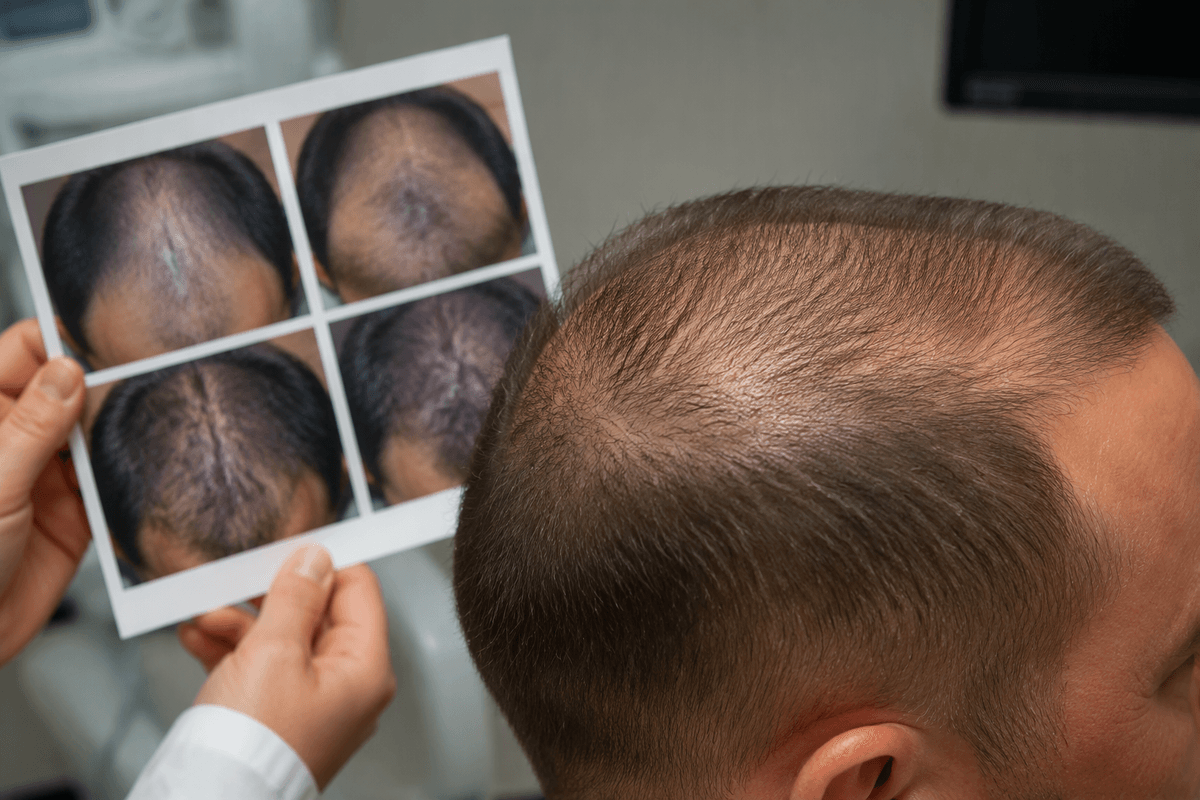
Under the same bathroom lighting, two people can appear to have a similar amount of thinning while responding very differently to treatment. A gradually widening part or receding hairline may reflect a pattern in which follicles slowly produce finer hairs, leaving more opportunity for a medicine to preserve or modestly improve coverage. By contrast, shedding that began suddenly after illness, major stress, weight change, or another disruption may follow a different course, with improvement depending less on long-term follicle support and more on whether the trigger has settled.
This distinction is easy to miss because hair changes overlap in everyday life. Someone may expect a medicine to reverse noticeable shedding when its more realistic role is slowing further loss, or may stop too soon because new growth is not visible yet. Even within a familiar pattern, response can vary by age, duration, and how much density remains. The practical benefit may therefore be stabilization rather than a dramatic visual change, and judging that difference can be difficult without consistent observations over time.
Why Early Changes Can Create More Uncertainty
A few weeks into treatment, the mirror may seem to show more scalp or more loose hairs in the shower, which can make the original decision feel suddenly wrong. Early shedding or changes in hair texture do not always reveal whether a medicine is helping, failing, or simply coinciding with the normal movement of follicles through their growth cycle. Lighting, washing habits, and day-to-day shedding can also exaggerate small differences, making informal comparisons unreliable.
Stopping immediately may prevent someone from seeing a later benefit, but continuing through worsening irritation or distress may not feel reasonable either. The timing of change matters, yet it is rarely precise enough to provide reassurance on its own. A gradual reduction in shedding may be easier to miss than a sudden increase, while visible regrowth can take longer to notice than unwanted effects. If changes are persistent, uncomfortable, or accompanied by other concerns, closer attention is sensible rather than assuming every early reaction is part of the process.
Side Effects Can Change The Treatment Experience

The first sign may be minor: a dry, itchy scalp after applying a product, or a change that is noticeable only when getting ready in the morning. Because these effects can appear before any visible improvement, they may dominate the treatment experience. Irritation, flaking, unwanted hair growth in nearby areas, or changes in sexual function or mood can carry more practical weight than their frequency suggests, especially when they interfere with comfort, confidence, or relationships.
Not every new sensation is caused by the medicine, and not every unwanted effect follows the same pattern. Some may ease with continued use, while others remain distracting or become more concerning over time. This makes informal trial and error difficult: changing the amount, skipping applications, or stopping and restarting can blur what is happening and may reduce consistency. A person may also tolerate a possible side effect differently once the expected benefit feels small. Persistent, severe, or troubling changes deserve closer attention rather than being dismissed as a necessary part of treatment.
When A Reasonable Step Produces Unexpected Discomfort
Sometimes the discomfort appears after a seemingly sensible adjustment: applying a medicine more regularly, changing the amount, or adding another product in hopes of improving coverage. Instead of reassurance, the person may notice burning, tenderness, increased dryness, dizziness, or a change that feels difficult to explain. Because the change follows an intentional step, it is easy to assume the treatment is responsible, although timing alone cannot always establish the cause.
This is where the experience becomes less straightforward than the instructions suggest. Continuing may feel risky, while stopping immediately can leave uncertainty about whether the reaction would have settled or whether another factor was involved. Repeated changes make the pattern even harder to judge, particularly when hair shedding and scalp sensations naturally fluctuate. Discomfort that is persistent, worsening, or affecting daily activities deserves more attention than a minor, short-lived inconvenience. A reasonable treatment choice still needs to remain tolerable in real life, not merely plausible in theory.
Balancing Consistency, Effort, Cost, And Uncertainty
Some treatments become difficult not because they are impossible to use, but because they compete with ordinary routines. An application may take only a few minutes, yet remembering it every day, waiting before washing, managing residue, or paying for repeated supplies can gradually feel burdensome. Missed doses do not always produce an obvious change, but inconsistency makes it harder to judge whether the medicine is ineffective or simply not being used steadily enough. Cost can create a similar problem when continuing treatment depends on a budget that changes from month to month.
Uncertainty remains even with careful use. A person may see less shedding but no clear regrowth, or notice a possible benefit while still dealing with irritation or another unwanted effect. That trade-off can shift over time as expectations, finances, and tolerance change. Rather than treating the decision as permanent, it may be more realistic to view it as an ongoing assessment of whether the observed benefit justifies the effort and discomfort. If the balance feels increasingly unfavorable, or concerning changes continue, a healthcare professional can help clarify what may be happening before further adjustments are made.